
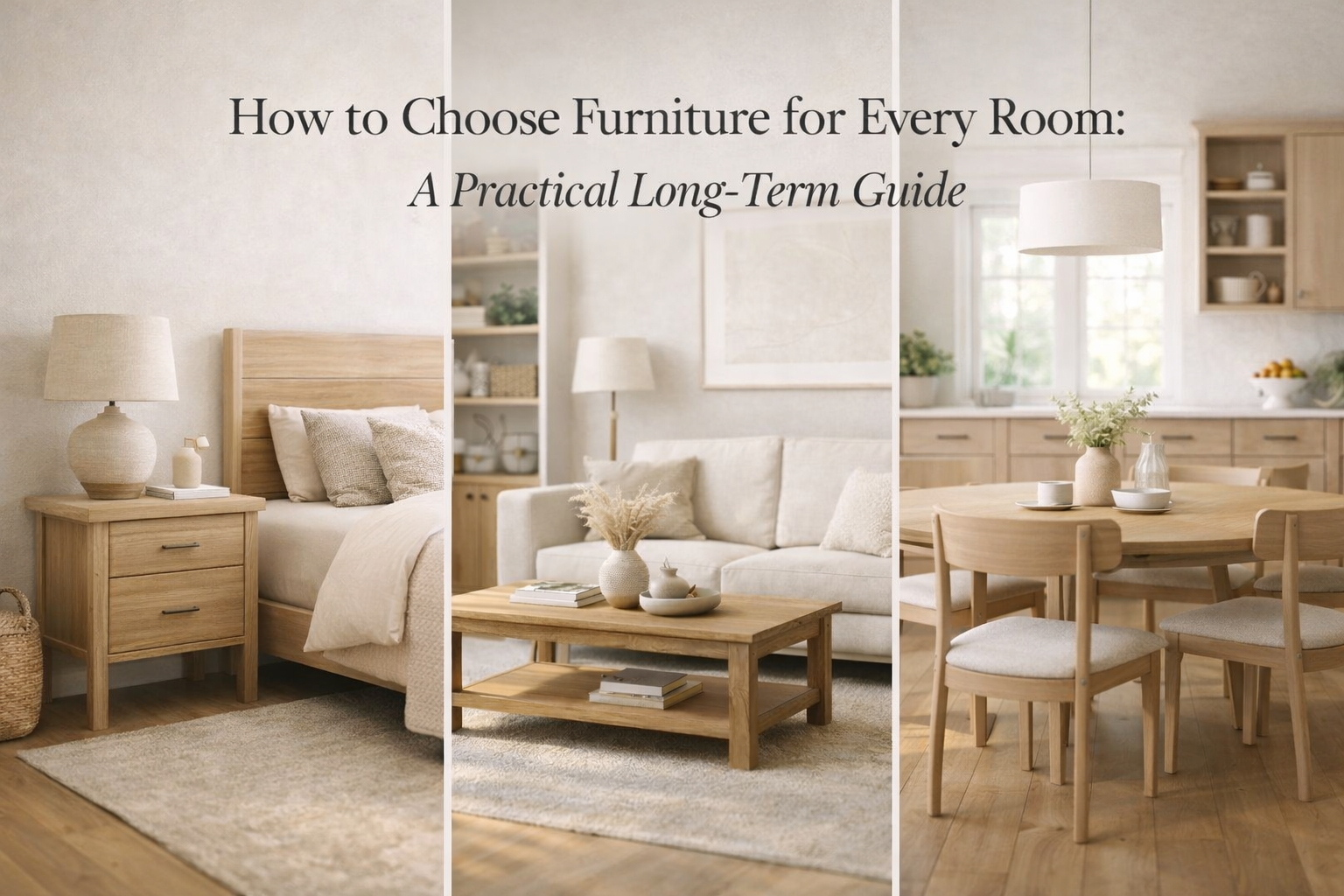
How to Choose Furniture for Every Room: A Practical Long-Term Guide
How to choose furniture for every room is one of the most important questions homeowners face, and also one of the easiest to approach the wrong way. Most furniture mistakes don’t happen because people lack taste. They happen because furniture decisions are often made as isolated purchases instead of as part of a system.
A sofa is chosen because it looks good online. A dining table is chosen because it fits a wall measurement. A bed frame is chosen because it matches a style. But once these pieces are placed in a real home, the problems begin. Movement feels restricted. Storage doesn’t align with routine. The space becomes visually inconsistent. The furniture itself may be high quality, but the home still feels uncomfortable.
Furniture planning is not about buying individual items. It is about designing a home that works.
The reason this matters is simple: furniture shapes your daily life more than any other design element. It determines how you move, how you rest, how you store things, and how the home feels emotionally over time. A room can look “nice” but still fail if the furniture creates friction in everyday use.
This guide is designed to be practical and realistic. It is not a trend-based style article. It’s a room-by-room framework for understanding how to choose furniture for every room in a way that supports long-term comfort, usability, and cohesion.
Why Furniture Decisions Fail in Real Homes
Furniture is rarely disappointing on day one. The disappointment comes later, after routine begins.
That’s because real homes don’t behave like showrooms. People don’t sit perfectly. They move constantly. They use furniture in unexpected ways. They place objects on surfaces. They walk around corners. They open doors. They store bags. They drop keys. They shift seating positions. They adapt.
This is why the most common furniture regrets are not about quality. They are about fit, scale, and routine compatibility.
A piece can be beautifully made and still feel wrong if:
- it interrupts circulation
- it blocks natural light
- it overwhelms the room visually
- it creates storage problems
- it forces awkward behavior
Understanding furniture as part of an environment is essential. If you want a deeper explanation of this concept, our guide on how furniture fits real homes breaks down why furniture performance changes once it enters daily life.
The Four Rules of Choosing Furniture That Works Long Term
Before we go room-by-room, it helps to understand the four core principles that apply everywhere.
1. Furniture must support movement
The best furniture layouts feel effortless. If you constantly step around edges or adjust your path, the furniture is not supporting the space.
2. Furniture must match proportion, not just measurements
A table can fit a room and still feel oversized. A cabinet can fit under a ceiling and still feel heavy. Proportion is about balance, not just size.
This is why understanding furniture scale in real homes and furniture proportions in real homes is one of the most valuable skills you can develop.
3. Furniture must support routine behavior
If storage doesn’t align with habits, clutter forms. If seating doesn’t align with comfort needs, people avoid the space.
The best interiors are built around behavior. Our guide on interior design and daily behavior explains why routine shapes design success more than intention.
4. Furniture must age gracefully
Furniture changes over time. Finishes wear. Fabric softens. Wood develops patina. Some materials become more attractive. Others become frustrating.
If you want to understand this more deeply, our article on how furniture ages in real homes breaks down what long-term wear actually looks like.
How to Choose Furniture for Every Room by Starting With the Home as a System
Most people approach furniture shopping room by room. That’s natural, but it can lead to inconsistency if each room is treated as a separate style project.
A home feels cohesive when furniture decisions share common structure:
- repeated wood tones
- consistent metal finishes
- similar scale logic
- repeated shapes (curves vs sharp lines)
- consistent fabric textures
This doesn’t mean everything should match. In fact, matching everything can feel flat. Cohesion comes from repetition and proportion.
If you want a full framework for this, our guide on how to make a home feel cohesive explains how homes lose cohesion over time and how to prevent it.
Room-by-Room Furniture Planning Framework
Now we’ll break down how furniture works in each area of the home, and what to prioritize for long-term success.
Living Room: Comfort, Flow, and Social Structure
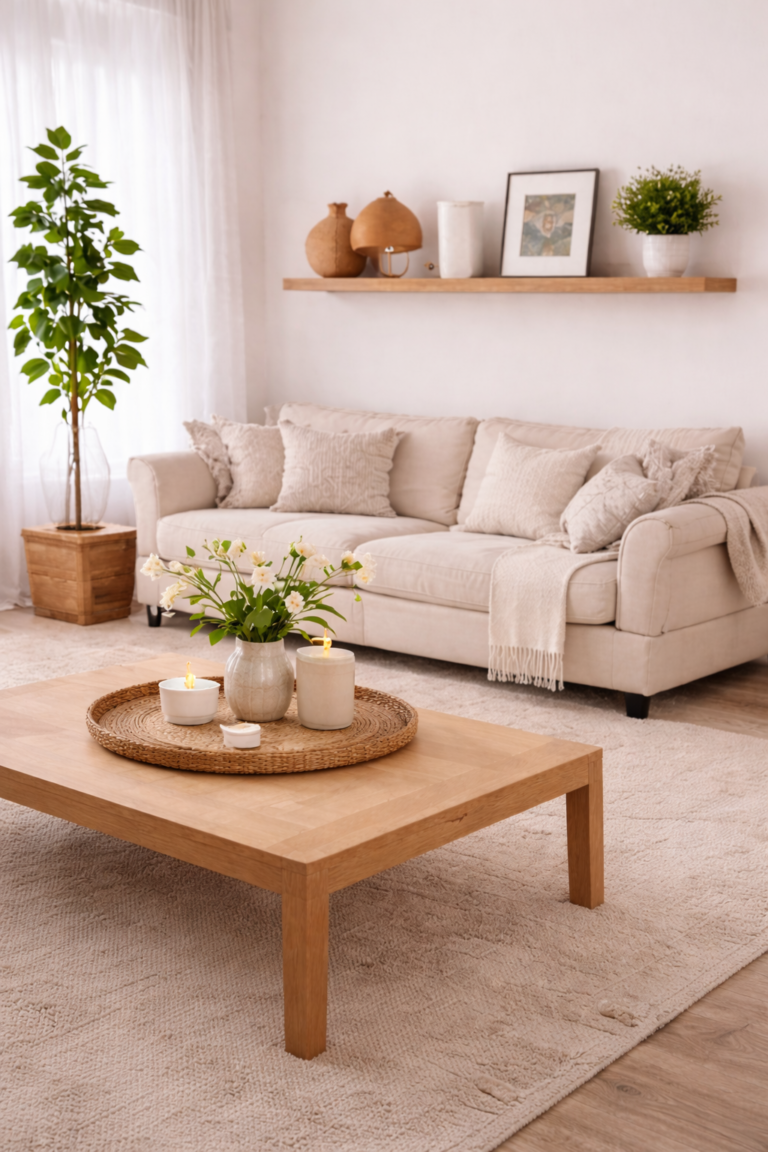
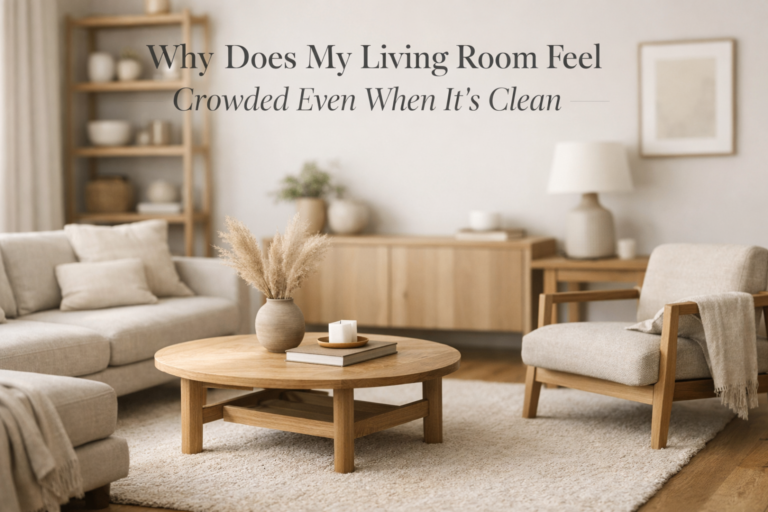
The living room is often the most used room in the home. It’s where people relax, host guests, watch TV, read, and sometimes work. Because of that, living room furniture should prioritize comfort and usability over appearance.
Anchor pieces to prioritize
- sofa or sectional
- coffee table or ottoman
- seating chairs
- media unit or storage
- rug and lighting support
Common living room mistakes
- choosing a sofa that is too deep for the room
- oversized sectionals that block circulation
- no side tables, leading to clutter and inconvenience
- rugs that are too small, making seating feel disconnected
A living room should feel like a defined zone. Seating should connect naturally. Movement should flow without obstacles.
If you want a full layout breakdown, our guide on how to arrange furniture in a living room explains how to build flow and seating balance.
Sofa selection matters more than most people expect
The sofa is the emotional center of the living room. It’s also the furniture piece most likely to disappoint after months of use.
A sofa that lasts should have:
- strong frame structure
- supportive cushions
- proportions that match the room
- upholstery that matches lifestyle
Our guide on how to choose a sofa that lasts covers these factors in detail.
Dining Room: Proportion and Practical Use Matter More Than Style
Dining rooms are often treated as formal spaces, but in real homes, dining furniture usually becomes multi-purpose.
Dining tables become:
- meal zones
- work surfaces
- homework areas
- gathering spaces
Because of this, the dining table should be chosen based on routine, not on how impressive it looks.
Key factors for dining furniture
- table size relative to circulation
- chair comfort for longer sitting
- surface finish durability
- storage options nearby (sideboards, cabinets)
A dining room fails when the table dominates the room. Chairs need clearance. People should be able to walk behind seated guests comfortably.
If you’re unsure whether your dining setup is balanced, understanding furniture proportions in real homes helps prevent the classic “it fits but feels wrong” problem.
Bedroom: Comfort, Storage, and Visual Calm
Bedrooms should feel calm. But many bedrooms fail because storage is treated as secondary.
The most important furniture decisions in a bedroom are:
- bed frame and mattress comfort
- wardrobe/storage placement
- nightstand usability
- lighting support
A bedroom works best when storage is hidden
Closed storage reduces visual clutter. Open storage often creates stress because it turns daily items into constant visual noise.
This is why furniture planning is closely connected to clutter control. If you want a practical system for reducing daily mess, our guide on how to reduce clutter in living spaces explains why clutter forms even in well-designed homes.
Proportion matters especially in bedrooms
A bed is visually dominant. If the bed is too large relative to the room, everything else feels squeezed.
Scale decisions are especially important in bedrooms with limited space. A slightly smaller nightstand or slimmer wardrobe can dramatically improve comfort.
Entryway: The Most Functional Room in the Home
Entryways are often small, but they have one of the biggest impacts on daily life.
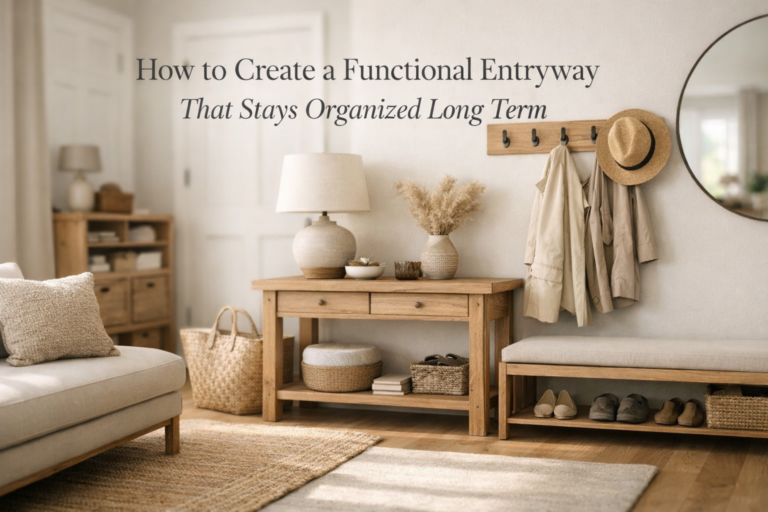
A functional entryway needs:
- shoe storage
- coat and bag system
- a drop zone for keys
- lighting and mirror support
Entryways become chaotic because they absorb repetitive behavior. If the system is not designed, clutter becomes automatic.
Our guide on how to create a functional entryway breaks down how to design this space realistically.
Kitchen and Breakfast Areas: Furniture Must Support Workflow
Kitchens are about movement and function. Furniture should support workflow and storage.
If you have a breakfast table or island seating, prioritize:
- surfaces that are easy to clean
- chairs that are comfortable and stable
- storage nearby for daily items
Kitchen furniture often suffers from finish-related disappointment. Glossy finishes show fingerprints quickly, while matte or textured finishes tend to hide daily wear better.
This is why finishes matter more than people expect. Our guide on how furniture ages in real homes explains why some finishes age gracefully while others become frustrating.
Home Office: Comfort and Ergonomics Over Style
A home office is where furniture must perform daily.
Key priorities:
- chair comfort and support
- desk height and depth
- storage for daily workflow
- lighting and screen glare control
The biggest mistake is choosing a chair that looks good but fails ergonomically. Comfort matters more than aesthetic perfection.
A home office is one of the best examples of why routine matters. Our guide on interior layouts and daily routines explains how daily behavior shapes design success.
Guest Room: Flexibility Is the Key
Guest rooms often serve multiple purposes: guest sleeping space, storage overflow, workout area, or hobby space.
Furniture that works best in guest rooms is flexible:
- beds with storage
- foldable desks
- modular shelving
- comfortable but minimal seating
Guest rooms should avoid overfurnishing. The goal is comfort without clutter.
Bathrooms: Small Furniture, Big Impact
Bathrooms are small spaces where furniture decisions have outsized effects.
Key furniture choices:
- vanity storage
- shelving systems
- laundry baskets and containment
- hooks and wall storage
Bathrooms benefit from vertical storage and contained categories. Open storage can look stylish, but without organization it becomes messy quickly.
This is a space where behavior matters. People use bathrooms quickly. Storage must be convenient.
Materials and Finishes: Choosing Furniture That Ages Well
Furniture longevity is not only about structure. It is about aging.
A table surface that shows scratches immediately becomes frustrating. A fabric that pills quickly looks worn. A cabinet finish that chips makes the entire piece feel cheap.
Solid wood and natural finishes
Solid wood often ages beautifully. It can develop patina rather than visible damage. But it can respond to humidity and temperature changes.
Upholstery and comfort
Upholstery performance depends on fiber type and weave density. Some fabrics feel soft but wear quickly. Others look less luxurious but perform better in daily use.
If you want a deeper breakdown, our guide on furniture usability over time explains why comfort becomes more important than appearance after months of living with furniture.
How to Avoid Furniture Regrets: A Practical Checklist
Here is a simple checklist to use before purchasing any major furniture piece.
Before you buy
- Does it support daily movement and circulation?
- Does it match the room’s proportions?
- Will it block light or pathways?
- Does it have storage support where needed?
- Will it age well under daily use?
- Does the material match your maintenance habits?
After you place it
- Does the room feel easier or harder to use?
- Does it improve routine or create friction?
- Does it create clutter patterns?
Furniture regret is often predictable. It shows up when a piece interrupts routine.
Building a Cohesive Home Room by Room
Cohesion is not achieved by matching everything. It is achieved by consistency in proportion, material repetition, and visual rhythm.
The easiest way to build cohesion is to choose:
- one dominant wood tone
- one or two metal finishes
- consistent upholstery textures
- repeated shapes across rooms
Cohesion also comes from furniture scale consistency. A home with oversized furniture in one room and small furniture in another feels disjointed.
Our guide on how to make a home feel cohesive explains why proportion creates cohesion automatically and how to avoid design drift over time.
FAQ
What is the best way to choose furniture for every room?
Start with routine and function. Choose anchor pieces first, plan circulation, and ensure furniture scale supports the room’s proportions.
Why does furniture that fits on paper feel wrong in real life?
Because proportion, light, and movement patterns affect how furniture feels once placed in a lived space. This is why scale matters as much as measurements.
How do I make furniture choices that last long term?
Prioritize structure, comfort, and materials that age gracefully. Avoid trend-based pieces that don’t support daily use.
Should every room match the same style?
Not exactly. Rooms don’t need identical style, but they should share consistent proportions, materials, and design logic for cohesion.
What is the most common furniture mistake people make?
Buying pieces individually without considering circulation, routine behavior, and how the home functions as a system.
Conclusion
Understanding how to choose furniture for every room is not about buying the most expensive pieces or copying showroom layouts. It is about designing a system that supports daily life. Furniture should work with movement, match proportion, support routine behavior, and age in a way that feels natural rather than disappointing.
When furniture decisions are made with structure, scale, and long-term usability in mind, the home becomes easier to live in. It stays more organized. It feels calmer. And most importantly, it continues to work as routines evolve over time.
A well-furnished home is not the one that looks perfect on day one. It is the one that still feels comfortable years later.

3 Comments