Furniture Materials Comparison: What Actually Holds Up Over Time
Furniture materials comparison is one of the most useful exercises a homeowner can do before buying anything expensive. Materials influence durability, comfort, maintenance, and even how a room feels visually. Yet many people rely on surface-level assumptions like believing that “solid wood” automatically means high quality or that metal frames always last longer than wood.
In reality, furniture materials behave differently depending on how they are used. Some materials age beautifully but require care. Others are low maintenance but feel less premium. Some are strong structurally but show visible wear quickly.
The purpose of this guide is not to rank materials as “good” or “bad,” but to explain how each performs in real life. If you understand material behavior, you can choose furniture that matches your routines instead of fighting them.
This article provides a detailed furniture materials comparison to help you make decisions that hold up long term.
Why Materials Matter More Than People Expect
Materials are not only about durability. They shape the daily experience of using furniture.
A tabletop material determines whether you worry about stains. Upholstery determines whether you can relax or constantly adjust cushions. Cabinet finishes determine whether fingerprints become an annoyance.
This is why materials should be evaluated based on:
- daily use intensity
- maintenance requirements
- aging characteristics
- structural strength
- comfort and tactile feel
When people regret furniture purchases, it is often because the material does not match their lifestyle.
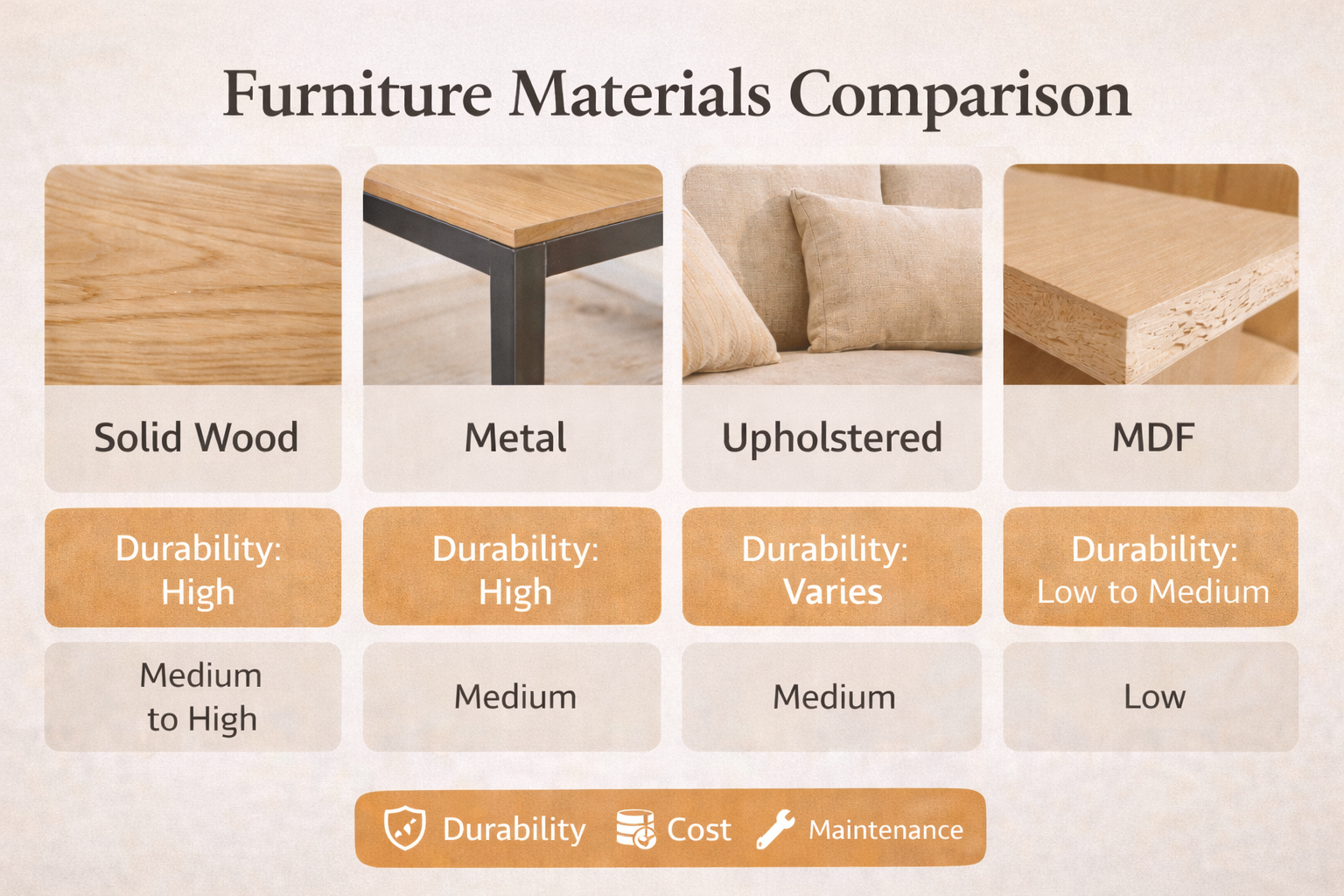
Solid Wood: The Classic Long-Term Choice
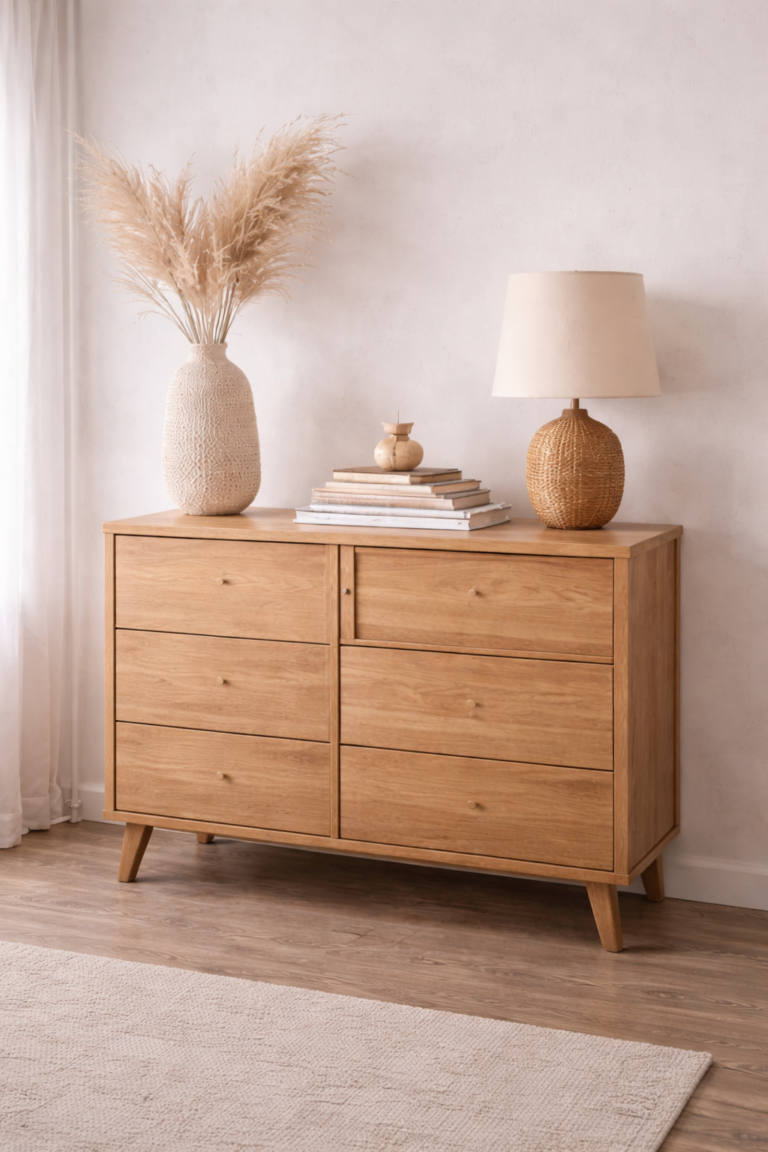
Solid wood is often considered the gold standard of furniture materials and in many cases, that reputation is well deserved. A well-built solid wood piece tends to feel substantial, stable, and timeless. It can often be refinished rather than replaced, and over the years it develops a natural patina that many homeowners find more attractive than a “perfect” surface.
That said, solid wood is not automatically a guarantee of quality. Construction still matters, and wood species makes a real difference. Oak behaves differently than pine, walnut ages differently than beech, and some softer woods will show dents and wear much faster in high-traffic homes. Two tables can both be labeled “solid wood,” yet perform very differently depending on joinery, finish, and overall build.
Solid wood tends to be an excellent long-term choice for pieces that take daily stress, such as:
- dining tables
- bed frames
- quality cabinets
- shelving systems
The main tradeoff is that wood is a living material. It can respond to humidity and temperature changes, especially in homes with seasonal variation. In certain environments, minor expansion, contraction, or subtle surface changes are normal.
If you want furniture that feels authentic and ages naturally, solid wood remains one of the best choices but it’s worth understanding how it will evolve over time. For a deeper look at this process, our guide on how furniture ages in real homes explains what to expect and how to plan for long-term satisfaction.
Veneer: Often Misunderstood, Sometimes Excellent
Veneer has a bad reputation, but it is not always low quality.
Veneer simply means a thin layer of wood applied over another material. The underlying material could be plywood, MDF, or particleboard. Veneer quality depends heavily on what it is applied to.
High-quality veneer over plywood can be stable and visually appealing. Low-quality veneer over particleboard can chip and swell.
Veneer is often used because it provides:
- visual consistency
- reduced warping compared to solid wood
- lower cost
The key is understanding the core material. Veneer itself is not the enemy. Cheap construction is.
MDF and Particleboard: Affordable but Limited
MDF (medium-density fiberboard) and particleboard are common in mass-market furniture. They are affordable, smooth, and easy to manufacture.
The downside is long-term performance. These materials are vulnerable to moisture, swelling, and edge damage. Once damaged, they are difficult to repair.
They can work for:
- low-use shelving
- temporary furniture
- decorative pieces
But for high-use furniture like dining tables or storage cabinets, they often show wear faster.
If your goal is long-term value, MDF and particleboard should be approached cautiously.
Metal Frames: Strong but Not Always Comfortable
Metal frames are often marketed as durable. Structurally, they can be strong, especially for chairs and bed frames.
However, metal furniture can also feel cold, rigid, and sometimes noisy. It also depends heavily on welding quality and joint design.
Metal works well for:
- industrial style pieces
- bed frames
- outdoor furniture
- minimalist shelving
But it is not automatically superior to wood. Comfort and design matter as much as strength.
Upholstery: The Most Complex Material Category
Upholstery is where furniture decisions become surprisingly emotional. People usually choose fabrics based on color, softness, or how “cozy” a sofa feels in the showroom. But in real homes, upholstery performance depends far more on weave density, fiber type, and overall construction than on appearance alone.
Common upholstery materials include:
- cotton blends
- linen blends
- polyester
- microfiber
- wool blends
The difference between a fabric that stays beautiful for years and one that quickly becomes frustrating often comes down to details most people don’t think about at the time of purchase. Pilling resistance, stain resistance, and how a fabric responds to repeated friction (especially on seat cushions and armrests) will determine whether the upholstery feels fresh or worn after a few months.
For low-maintenance homes, tightly woven synthetic blends and microfiber often perform best because they resist staining and hold their structure. Linen blends, on the other hand, can look effortlessly premium and textured, but they tend to show creasing and wear more visibly something that can be either charming or irritating depending on your expectations.
This is why upholstery is such an important part of any furniture materials comparison. It doesn’t just affect aesthetics. It directly influences comfort, usability, and long-term satisfaction. For a deeper look at how upholstery performs in everyday living, our guide on furniture usability over time explains what matters most once the furniture becomes part of your routine.
Leather: Premium Feel, But Requires Realistic Expectations
Leather ages in a distinctive way. It can become softer and more visually complex, but it also shows wear patterns.
High-quality leather often develops character. Low-quality leather or bonded leather can crack or peel.
Leather is best for:
- sofas in high-use households
- chairs where durability matters
- homes where natural aging is appreciated
Leather is not maintenance-free, but it can be long-lasting when cared for properly.
Finishes: The Hidden Factor That Changes Everything
Many furniture disappointments come from finishes, not from the material itself. A piece can be made from solid wood or high-quality metal, yet still feel frustrating in everyday use if the finish doesn’t match the way the home actually functions.
Glossy lacquer finishes are a perfect example. They often look sleek and premium in photos, but in real life they tend to show fingerprints, smudges, and small scratches almost immediately especially on dining tables, coffee tables, and cabinet fronts. Matte finishes can be more forgiving, hiding wear and minor imperfections more naturally. Painted surfaces may look clean and modern at first, but they can chip over time, particularly around edges and handles. Natural oil finishes are often easier to repair and refresh, which makes them appealing for people who prefer furniture that can be maintained rather than replaced.
The best finish is rarely the one that looks most impressive on day one. It’s the one that holds up under real use. Finishes should be chosen based on:
- daily contact intensity
- whether children or pets are present
- cleaning habits and preferred products
- tolerance for visible wear and patina
Finishes shape not only durability, but also how furniture feels emotionally over time. Some finishes age poorly, making a piece feel “old” too quickly. Others develop character and depth, giving furniture a lived-in quality that feels natural rather than damaged.
For a deeper look at what aging actually looks like across different surfaces, our guide on how furniture ages in real homes breaks down what to expect and which finishes tend to hold up best.
FAQ
Which furniture material lasts the longest?
High-quality solid wood and well-built metal frames often last longest, but durability depends on construction quality.
Is veneer always bad?
No. Veneer over strong cores like plywood can be stable and visually attractive.
Is MDF furniture worth buying?
It can be acceptable for low-use pieces, but it often performs poorly in high-use furniture.
What upholstery fabric is easiest to maintain?
Tightly woven synthetic blends and microfiber tend to be easiest to clean and resist wear.
Does leather always last longer than fabric?
Not always. High-quality leather can last long, but poor leather can crack or peel faster than good fabric.
Conclusion
A smart furniture materials comparison is not about choosing the most expensive option. It is about choosing materials that match how furniture will be used. Solid wood, veneer, metal, upholstery, and finishes all have strengths and weaknesses. The best long-term choice is the one that supports your routines, your maintenance habits, and your expectations about aging.
Furniture lasts longest when its material behavior feels natural rather than disappointing.