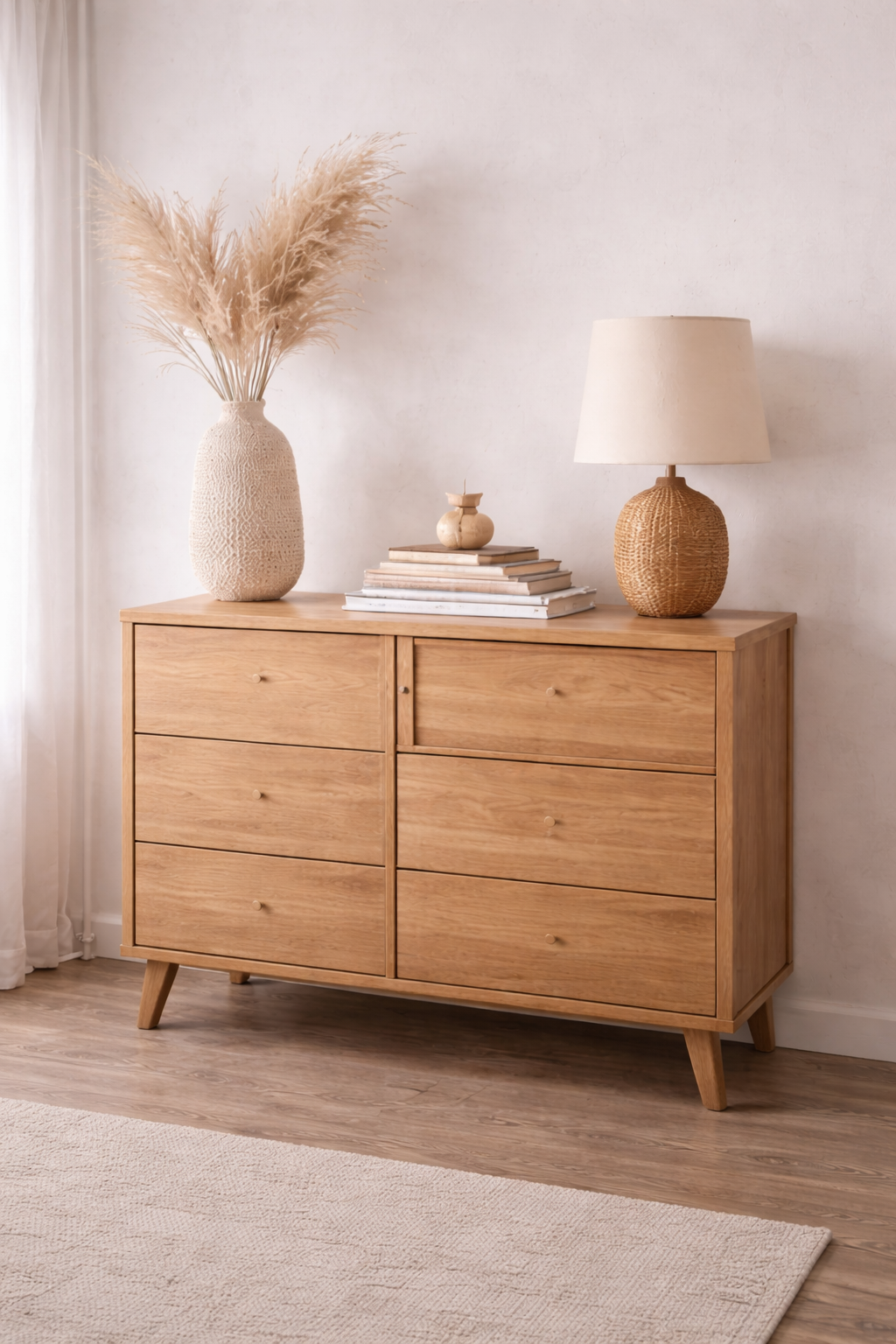
Furniture Scale in Real Homes Is Harder to Judge Than Size
Furniture scale in real homes is one of the most misunderstood aspects of furnishing a space. Scale is not about whether furniture fits – it’s about how it feels in relation to the room.
Many people confuse size with scale, which leads to spaces that feel visually heavy or unbalanced.
Understanding furniture scale in real homes helps create rooms that feel calm and proportional.
Furniture Scale in Real Homes Is Always Relative
Furniture is never experienced in isolation. It’s always perceived in relationship to the room itself its ceiling height, wall length, natural light, and the other pieces surrounding it. That’s why scale can feel completely different once furniture is placed in a real home, even if the measurements looked perfect on paper.
A tall cabinet in a low-ceiling room can instantly feel heavier than expected, visually pulling the room downward. Deep seating in a narrow space may appear oversized, not because it’s objectively large, but because it dominates circulation and compresses the usable area. Even a well-made piece can feel “wrong” if its scale disrupts the balance of the room.
This is exactly why furniture scale in real homes often surprises people after delivery. The issue usually isn’t the furniture itself, it’s the relationship between the furniture and the space around it.
In many cases, the solution comes down to understanding proportion, which is why it helps to review furniture proportions in real homes when planning a layout that feels comfortable long term.
Visual Weight Matters More Than Measurements
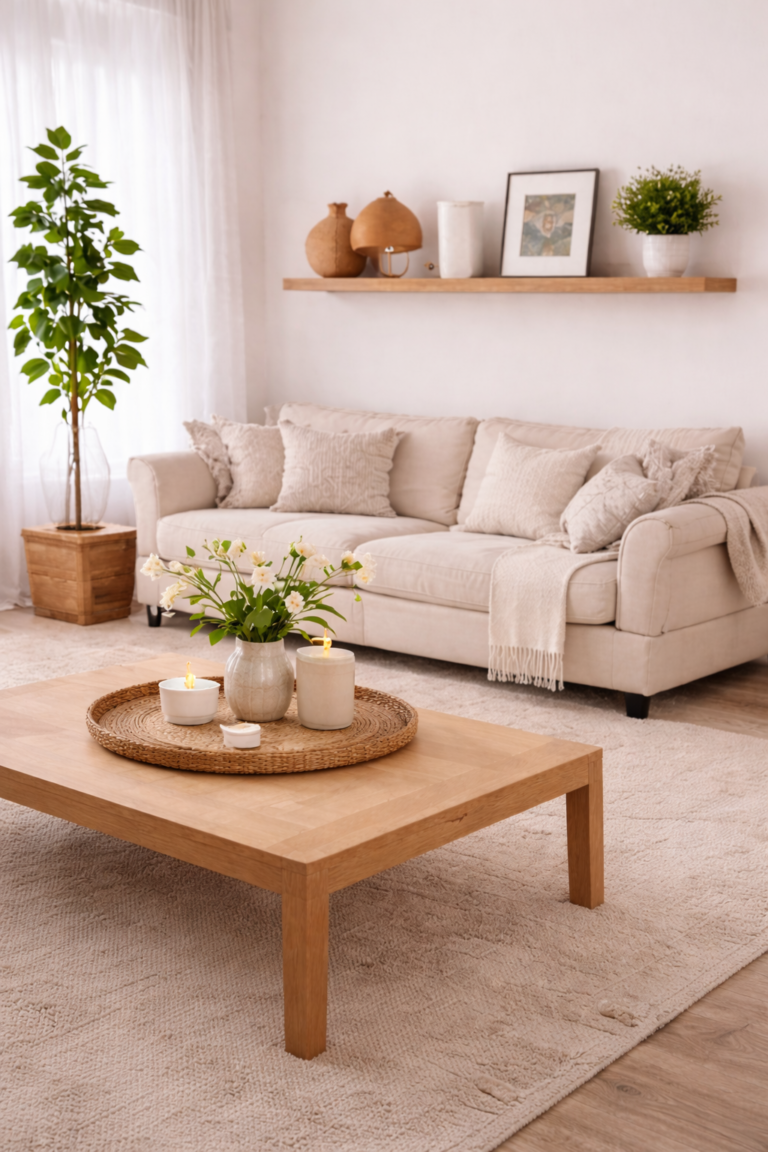
Two sofas of the same size can feel completely different.
Arm thickness, leg height, and material density all affect visual weight. Because of this, furniture scale in real homes is influenced by design details, not just dimensions.
Conclusion
Furniture scale is experiential, not mathematical.
When furniture scale in real homes feels wrong, it’s usually a visual balance issue – not a sizing mistake.
What is furniture scale in interior spaces?
It refers to how furniture visually relates to the size and shape of the room.
Why does furniture feel too large even when it fits?
Because visual weight and surrounding elements affect perception.
Can scale issues be fixed without replacing furniture?
Often yes, by adjusting layout, spacing, or pairing with lighter elements.