How Furniture Fits Real Homes Is Different Than Most People Expect
How furniture fits real homes is not just a matter of measurements. Even when furniture technically fits into a space, it can feel awkward, tight, or visually unbalanced once people start living around it.
This happens because real homes introduce movement, routines, and spatial limitations that aren’t visible during planning or purchasing.
Understanding how furniture fits real homes helps prevent common layout issues and leads to spaces that feel easier to live in long term.
How Furniture Fits Real Homes Depends on Movement
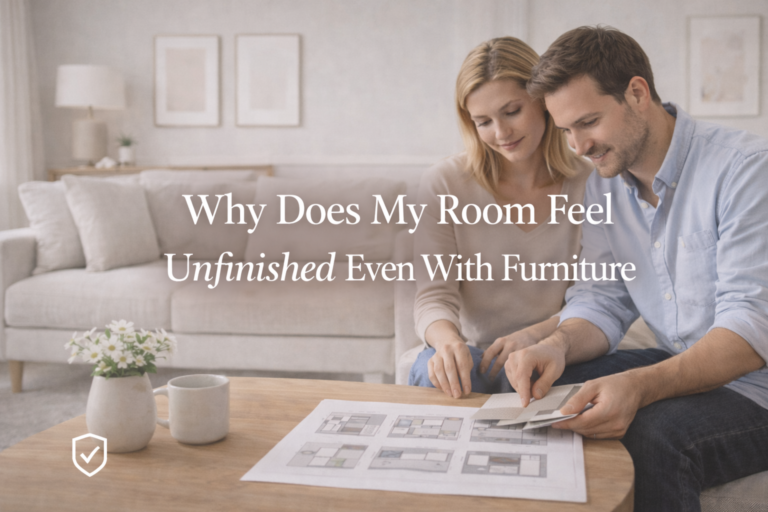
Most people plan furniture around static floor plans, but everyday living is rarely static. Movement patterns, door swings, and walking clearance quickly reveal whether a piece truly fits the space.
A dining table may technically fit in the room, yet still interrupt circulation and make daily use feel awkward. A sofa may be comfortable on its own, but if it blocks the natural flow between doorways, it will gradually feel like an obstacle rather than a centerpiece.
This is why how furniture fits real homes is usually revealed only after daily routines begin—not on the day the furniture is delivered.
In many cases, these issues come down to scale and proportion, which is why it helps to understand the basics of furniture proportions in real homes before committing to a final layout.
Furniture Fit Changes With Daily Routines
Homes change throughout the day. Chairs move, items are added, and spaces are reused for different purposes.
Because of this, how furniture fits real homes is influenced by lifestyle, not just room size. Furniture that allows flexibility tends to feel better over time than rigid, space-filling pieces.
Interior design concepts often underestimate this reality.
Conclusion
Furniture that fits on paper doesn’t always fit in practice.
When thinking about how furniture fits real homes, it’s important to consider movement, habits, and adaptability not just dimensions.
What does it mean for furniture to fit a real home?
It means the furniture supports movement, daily routines, and visual balance, not just room size.
Why does furniture feel cramped after moving in?
Because real use reveals circulation and spacing issues that aren’t obvious during planning.
Can furniture placement improve fit without replacing pieces?
Yes. Small layout changes often improve flow and comfort significantly.