
How to Choose a Sofa That Lasts (Comfort, Structure, and Real Use)
How to choose a sofa that lasts is one of the most important furniture decisions in any home. A sofa is rarely just a decorative piece. It becomes the most-used furniture item in the living space. People sit on it daily, stretch out, work from it, nap on it, host guests, and sometimes even eat on it. Because it carries so much daily use, the wrong sofa becomes a constant source of discomfort and regret.
The biggest mistake people make is choosing a sofa based on first impressions. A sofa can feel soft and luxurious in a showroom but lose its structure within a year. It can look stylish online but feel oversized once placed in a real room. It can even be expensive and still fail if the internal construction is weak.
Choosing a long-lasting sofa is not about chasing trends. It’s about understanding structure, comfort, and proportion in a realistic way.
In this guide, we’ll break down how to choose a sofa that lasts, focusing on what matters most for real homes and long-term satisfaction.
How to Choose a Sofa That Lasts by Prioritizing the Frame
The frame is the foundation of the sofa.
If the frame is weak, no upholstery or cushion quality will save it. A sofa may look perfect for a year, then start to creak, sag, or shift.
A durable sofa frame should feel stable under movement. When you sit down, it should not flex excessively. When you lift one corner slightly, it should not twist.
Key frame considerations include:
- hardwood vs softwood
- reinforced corners
- quality joinery
- overall structural weight
A sofa that lasts long-term usually has a frame designed to handle repeated stress.
This is why durability begins inside the sofa, not on the surface.
Cushion Construction Determines Long-Term Comfort
Cushions are where most sofas fail emotionally.
A sofa can still be structurally fine, but if the cushions flatten quickly, the sofa becomes disappointing. It may look worn, feel uncomfortable, and require constant fluffing.
Long-term cushion performance depends on:
- foam density
- spring support
- fill materials
- cushion thickness
Soft cushions feel great in a showroom because they give immediate comfort. But overly soft cushions often compress quickly.
The best long-term comfort usually comes from a balance: cushions that feel supportive, not overly plush.
This ties into the broader concept of furniture usability over time, which explains why comfort becomes more important than appearance after months of daily use.
How to Choose a Sofa That Lasts by Getting Proportions Right
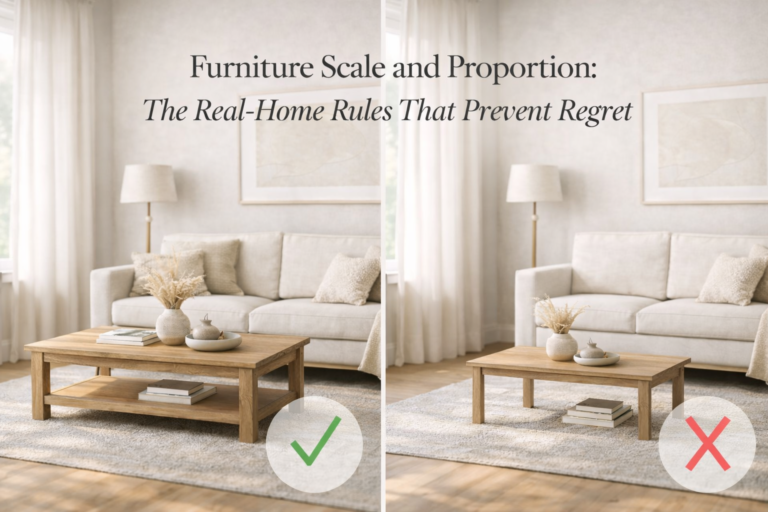
Many sofa regrets come from proportion, not quality.
A sofa can be well-built but still feel wrong if it dominates the room.
Common proportion mistakes include:
- sofas too deep for narrow rooms
- sofas too long for natural circulation
- low sofas paired with tall storage units
- oversized sectionals that reduce movement space
This is why scale matters. If you want to avoid expensive mistakes, our guide on furniture scale in real homes explains how proportion affects comfort and flow.
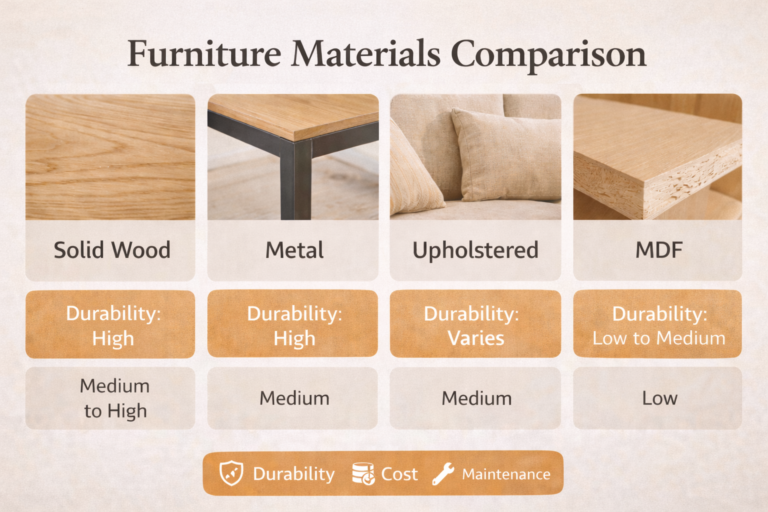
Fabric and Upholstery: Practical Matters More Than Perfect
Upholstery is where lifestyle matters most.
A light fabric might look premium but show stains easily. A textured fabric might hide wear but feel rough. Microfiber may feel less luxurious but perform extremely well in busy households.
When choosing upholstery, think about:
- pilling resistance
- stain resistance
- pet hair visibility
- cleaning requirements
- texture comfort
This is why upholstery is not just an aesthetic choice. It determines daily satisfaction.
Our guide on how furniture ages in real homes explains why some fabrics develop character while others develop frustration.
Sofa Layout and Room Function Matter More Than People Expect
A sofa should support how the room is used.
If your living room is social, the sofa should allow conversation. If the room is TV-based, the sofa should support viewing comfort. If the room is multi-use, the sofa should be flexible.
The best sofa is not always the biggest. In many rooms, slightly smaller sofas create better flow and feel more comfortable long term.
This is why sofa selection is directly connected to understanding how furniture fits real homes.
FAQ
How do I know if a sofa will last long term?
Check the frame stability, cushion density, and upholstery durability. A long-lasting sofa should feel supportive, not overly soft.
What is the biggest mistake people make when buying a sofa?
Choosing based on appearance and short showroom comfort instead of long-term support and proportions.
Is a sectional always a good idea?
Not always. Sectionals can dominate smaller rooms and reduce circulation. They work best in large spaces with clear layout zones.
What sofa fabric is easiest to maintain?
Tightly woven synthetic blends and microfiber are often easiest to clean and resist staining.
Should I prioritize comfort or style?
Comfort should come first. Style matters, but discomfort becomes a daily problem that reduces long-term satisfaction.
Conclusion
Learning how to choose a sofa that lasts is not about buying the most expensive model or following design trends. It is about structure, cushion performance, and proportion. A sofa should support daily life effortlessly, remain comfortable over time, and fit naturally within the room’s circulation and routine.
When you choose a sofa with strong internal construction, realistic upholstery, and balanced scale, you’re not just buying furniture you’re investing in the comfort of your home for years.