How to Create a Functional Entryway That Stays Organized Long Term
How to create a functional entryway is one of the most overlooked home design questions, yet it affects daily life more than almost any other area. The entryway is the first space you interact with when you come home, and the last space you pass through before leaving. If it’s chaotic, the home immediately feels stressful. If it’s organized, the entire home feels calmer.
The reason entryways become problematic is simple: they absorb the most repetitive daily behavior. Shoes come off. Keys get dropped. Jackets get thrown somewhere convenient. Bags land on the nearest chair. Packages arrive. Umbrellas drip. And because all of this happens quickly, the entryway becomes a clutter magnet unless it is designed intentionally.
A functional entryway is not about being minimal. It’s about being realistic. It should support your routine without requiring constant effort. The goal is a space that stays “good enough” even on busy days.
In this guide, we’ll break down how to create a functional entryway that works long term, regardless of whether you have a large hallway, a small corner near the door, or no dedicated entry space at all.
Why Entryways Get Messy Faster Than Other Rooms
Entryways are high-traffic areas by nature. Unlike a living room or bedroom, you don’t enter an entryway slowly. You rush through it. That urgency changes how people behave.
Most entryway clutter comes from:
- items that need a place immediately
- lack of convenient storage near the door
- surfaces that invite “temporary” dumping
- shoes and outerwear that don’t have a dedicated zone
The key insight is that entryway clutter is predictable. It happens in the same patterns every day. That means it can be designed around.
This is why learning how to create a functional entryway is less about cleaning and more about designing a system that makes mess harder to create.
If you want a broader room-by-room planning framework, our home furniture planning guide explains how to build systems that stay functional long term.
How to Create a Functional Entryway by Designing a Drop Zone
The most important entryway element is the drop zone. Every home has one, even if it wasn’t intentionally designed.
A drop zone is where people naturally place:
- keys
- wallets
- sunglasses
- bags
- packages
If you don’t design a drop zone, the home will create one automatically. It will usually appear on a dining table, kitchen counter, or random chair near the door.
A functional drop zone needs three things:
1. A small surface
A narrow console table, wall shelf, or even a floating ledge works well. The surface should be limited in size, because large surfaces invite clutter.
2. A container system
Trays, bowls, or small baskets prevent items from spreading. They create a visual boundary and make the area feel intentional.
3. A clear “reset routine”
If the drop zone is emptied weekly or even twice per week, it never becomes overwhelming.
A strong drop zone is the foundation of how to create a functional entryway, because it reduces decision-making. You don’t think about where to put things. You simply do it.
Shoe Storage: The Biggest Entryway Problem to Solve
Shoes are often the first visible mess in an entryway. They also take up floor space, which makes a hallway feel narrower.
The best shoe storage depends on how many people live in the home, but the most effective strategy is always the same: limit what stays near the door.
Instead of storing every pair in the entryway, keep only:
- daily-use shoes
- one backup pair per person
- seasonal essentials (boots in winter, sandals in summer)
Everything else belongs in a closet or bedroom storage.
Shoe storage options that work well include:
- closed shoe cabinets
- benches with hidden compartments
- open racks only if they are limited in size
- vertical shoe organizers in closets
Closed storage tends to feel calmer because it reduces visual clutter. If you want a deeper look at clutter patterns and why they repeat, our guide on how to reduce clutter in living spaces breaks down the psychology behind it.
How to Create a Functional Entryway With Jacket and Coat Control
Jackets and outerwear create clutter because they are bulky. A single coat on a chair can make an entryway feel messy instantly.
The solution is not more hooks. The solution is the right number of hooks, placed correctly.
A coat system should include:
- hooks at adult height
- hooks at child height if needed
- a dedicated spot for bags
- a separate spot for guest coats if possible
One of the most common mistakes is using a coat rack that is too small. When coats pile up, it becomes visually chaotic.
If you don’t have a closet, wall hooks combined with a storage bench is one of the most functional solutions.
Entryway Furniture That Actually Works
Many entryways fail because the furniture is decorative rather than functional.
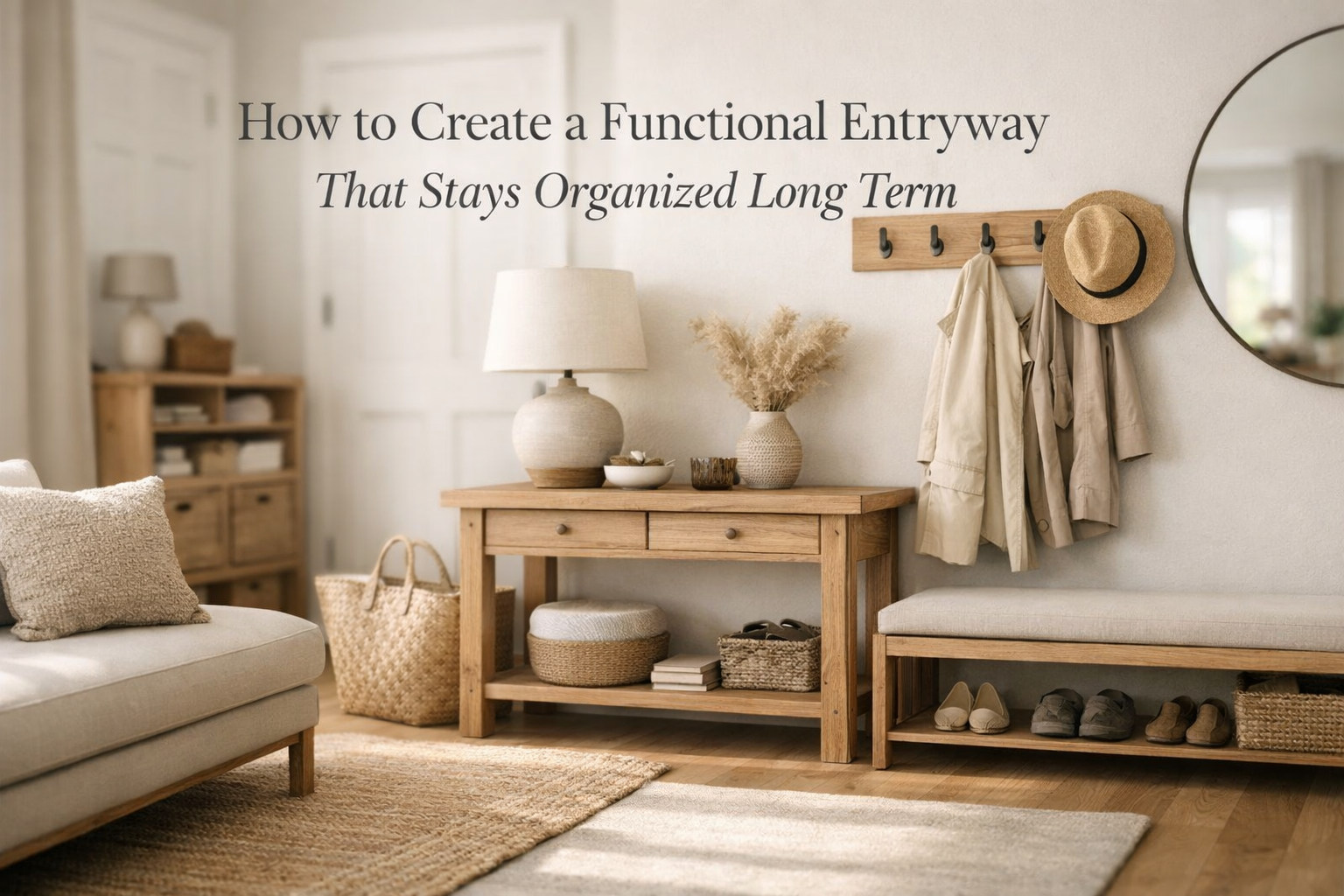
Functional entryway furniture usually includes:
- a bench for sitting while putting on shoes
- a console table or narrow shelf for the drop zone
- closed storage for shoes or seasonal clutter
- a mirror to check appearance and reflect light
A mirror is underrated. It visually expands narrow entryways and improves light distribution. It also creates a finished look even in small spaces.
When choosing entryway furniture, scale matters. A bulky bench can block circulation. A console table that is too deep can make a hallway feel tight.
This ties directly into understanding furniture proportions in real homes, which helps prevent the common mistake of buying entryway furniture that technically fits but feels uncomfortable.
Lighting: The Entryway Detail That Changes Everything
Entryways often feel dark because they have fewer windows.
A functional entryway needs lighting that supports routine. Poor lighting makes it harder to find keys, see shoes, or feel calm when arriving home.
If possible, include:
- overhead lighting
- a wall sconce or table lamp
- warm bulb temperature for comfort
Lighting also affects mood. A well-lit entryway makes the entire home feel more welcoming.
For a deeper look at how lighting changes furniture and space perception, our guide on why furniture looks different in real homes explains why rooms feel warmer, darker, or more textured depending on environment.
How to Create a Functional Entryway in Small or Awkward Spaces
Not every home has a dedicated hallway. Some homes have only a small corner near the door.
In these cases, the goal is to create a micro-entryway.
A micro-entryway can be built with:
- wall hooks
- a narrow floating shelf
- a shoe cabinet with minimal depth
- a basket for bags or seasonal items
The most important thing is vertical storage. When floor space is limited, walls become your best tool.
Even a 30 cm deep cabinet can transform an entryway if it prevents shoes from spreading across the floor.
The “Maintenance Mindset”: Why Entryways Need Simple Systems
Entryways work best when they are low-maintenance.
If a system requires daily perfection, it will fail. The best entryway systems are designed for busy days.
The goal is not a spotless entryway. The goal is a space that resets easily.
A simple weekly routine might include:
- clearing the drop zone
- returning shoes to proper storage
- removing unnecessary coats
- wiping surfaces quickly
This “reset” approach prevents clutter from becoming permanent.
If you’re trying to create a home that stays functional without constant effort, our article on interior design and daily behavior explains why design systems must match routine rather than ideal intentions.
FAQ
How do I create a functional entryway in a small apartment?
Use vertical storage like hooks, a floating shelf, and a narrow shoe cabinet. Focus on a defined drop zone and keep only daily-use items near the door.
What is the most important part of an entryway?
A drop zone. Without it, keys, bags, and mail will spread into other rooms and create clutter.
Should entryway storage be open or closed?
Closed storage usually feels calmer because it hides shoes and clutter. Open storage can work if it is limited and structured.
How do I keep my entryway organized long term?
Design around routine. Use a small surface with trays, keep shoe storage limited, and do a simple weekly reset instead of constant daily cleaning.
Do I need an entryway bench?
Not always, but a bench is one of the most practical pieces because it supports shoes, storage, and comfort.
Conclusion
Learning how to create a functional entryway is not about buying expensive furniture or making the space look like a magazine photo. It is about creating a system that supports daily behavior. When shoes, coats, keys, and bags have logical places, the entryway stays calm with normal effort, and the entire home feels more organized as a result.
A well-designed entryway reduces stress, improves routine, and sets the tone for the rest of the home every single day.