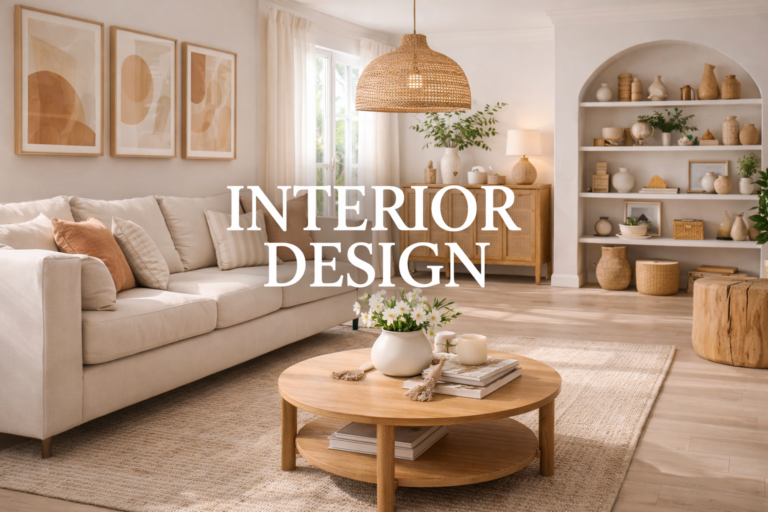
Interior Design: A Practical Guide To Creating A Home That Works And Feels Like You
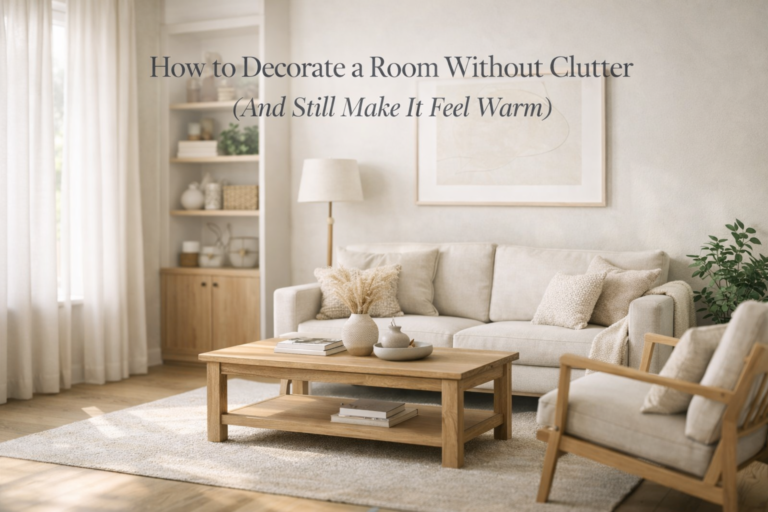
Most of us don’t need a “perfect” home, we need a home that supports how we actually live. The kind where the walkway isn’t a daily obstacle course, the lighting doesn’t make everything feel like a waiting room, and the room has a vibe that’s unmistakably ours.
That’s the real promise of interior design: not just making things look good, but making a space feel right and function better. In this guide, we’ll walk through a practical, step-by-step interior design process, defining style, planning layout, choosing a color palette, layering textures, dialing in lighting, and finishing with furniture and accessories that feel intentional (not accidental).
What Interior Design Really Means (And Why It Matters)
Interior design gets treated like a luxury or a “nice-to-have,” but it’s closer to a quality-of-life tool. It’s the difference between a living room that looks fine in photos and one that actually works at 7:30 a.m. when someone’s hunting for keys, another person’s making coffee, and the dog is doing figure eights underfoot.
At its core, interior design is the thoughtful planning of a space, how it functions, how it flows, and how it feels. It’s part psychology (what makes us feel calm or energized), part engineering (clearances, lighting, durability), and part art (proportion, color, composition).
Interior Design Vs. Decorating Vs. Styling
These terms get swapped constantly, so let’s separate them in plain language:
- Interior design is the big picture. We’re considering layout, circulation paths, lighting layers, storage needs, furniture scale, and sometimes even renovations (like moving outlets or choosing flooring). It’s problem-solving.
- Decorating is what we add to a space to make it beautiful, paint, furniture, rugs, curtains, wall treatments, and decorative elements.
- Styling is the finishing touch. Think: arranging coffee-table books, balancing a shelf, placing pillows, adding a branch to a vase. Styling makes a room feel “done,” but it can’t fix a bad layout.
If we only style a room that’s poorly planned, it might photograph well… and still be annoying to live in.
How Good Design Improves Daily Life
Good interior design reduces friction. It saves time, lowers stress, and helps us use the space we already pay for.
A few everyday wins that good design delivers:
- Better flow: Clear pathways (no squeezing past furniture) make a home feel bigger and calmer.
- Smarter storage: When storage is where we need it, clutter drops. That’s not a personality change, it’s design.
- Comfort: Correct furniture proportions, softer lighting, and layered textiles make spaces feel physically welcoming.
- Function matching reality: A “formal dining room” might be less useful than a flexible workspace + game table. Design gives us permission to choose what fits our life.
Interior design matters because we live inside our choices, every single day.
Define Your Style And Set A Clear Direction
Before we buy anything, before we even pick paint, we need a direction. Style doesn’t have to be a label (“modern farmhouse,” “Japandi,” etc.). What matters is clarity: what we like, why we like it, and how we want the home to feel.
How To Identify Your Preferences (Without Getting Overwhelmed)
The internet can flood us with inspiration until we can’t tell what we actually like. Instead, we can narrow it down with a simple approach:
- Collect 15–20 images of rooms we’d happily live in (not just admire). Screenshots are fine.
- Look for repeats: Are we consistently saving warm woods? Curved furniture? White walls with contrast? Moody colors?
- Name the feelings: Calm, bright, cozy, dramatic, minimal, playful. “Feeling words” are often more helpful than style labels.
- Note the dealbreakers: Maybe we love the look of open shelving but hate dusting. That’s valuable information.
A quick gut-check helps: if an image is mostly about the architecture of the house (not the interior choices), we don’t count it. We’re designing our space, not shopping for a new building.
Build A Cohesive Look With A Simple Style Brief
Designers use briefs because they prevent expensive detours. We can do the same in a few lines:
- Overall vibe: “Warm, clean-lined, lived-in (not precious).”
- Core materials: “Oak, black metal, linen, soft ceramics.”
- Color direction: “Warm neutrals + deep green accents.”
- Rules of the road: “Nothing too shiny: prioritize comfort: avoid tiny patterns.”
Then we make it practical by choosing three anchor words that guide decisions. For example:
- Calm, warm, functional
If a purchase doesn’t fit at least two of the three, it’s probably a “pretty but wrong” item that will float around the house like a design orphan.
Plan The Space Before You Buy Anything
This is where great interior design starts to feel unfairly powerful: we can make a room work better without buying a single new object. Layout is often the real problem, furniture just gets blamed.
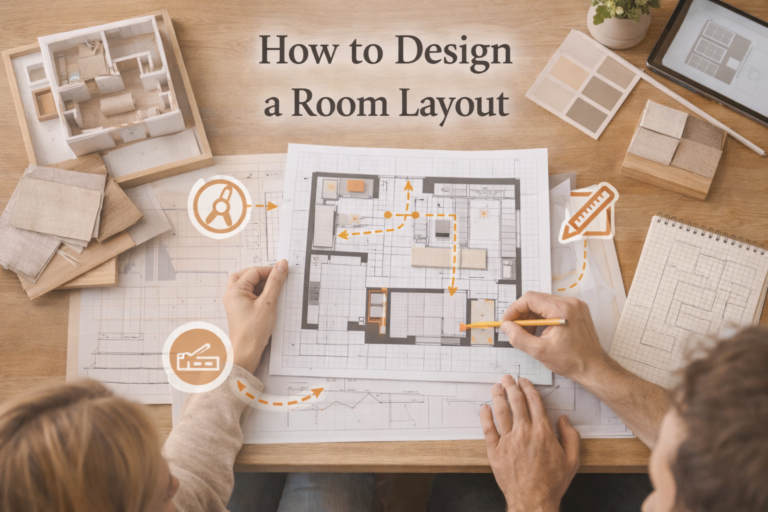
Measure, Map, And Create Functional Zones
We don’t need fancy software. We do need accuracy.
- Measure the room: length, width, ceiling height.
- Mark constraints: doors that swing, windows, vents, radiators, outlets.
- Measure key furniture pieces we already own (and want to keep).
Then we create zones based on what we actually do in the room:
- Conversation zone (sofa + chairs)
- Media zone (TV + seating sightlines)
- Reading/work zone (chair + lamp + small table)
- Drop zone (entry hooks, bench, tray for keys)
A good rule: design for paths first. Most rooms fail because we force people to walk through the middle of the “main moment.” Aim for clear walkways, especially around doors and between seating.
Common Layout Mistakes And How To Avoid Them
A few mistakes show up constantly (and they’re fixable):
- Pushing everything against the walls. It can make a room feel like a waiting area. Even pulling a sofa forward 4–8 inches helps.
- Rugs that are too small. A rug should usually anchor the seating. In living rooms, front legs of major pieces should sit on it (at minimum).
- No “landing zones.” If there’s nowhere to set a drink, a bag, or a phone, clutter appears. Side tables aren’t optional: they’re functional.
- Blocking natural movement. If we have to zigzag around furniture, the room will never feel relaxing.
When we plan first, we stop buying “solutions” that aren’t actually solving anything.
Choose A Color Palette That Holds The Room Together
Color is one of the fastest ways to make a home feel intentional, or chaotic. The trick isn’t picking a “pretty” paint color. It’s building a palette that stays consistent across walls, furniture, textiles, and finishes.
Warm Vs. Cool, Undertones, And Lighting Effects
Two whites can look wildly different in the same room because of undertones.
- Warm colors have yellow, red, or brown undertones (cozier, softer).
- Cool colors lean blue, green, or gray (crisper, sometimes moodier).
And lighting changes everything:
- North-facing rooms often read cooler: warm paint can balance that.
- South-facing rooms get warmer light: cool paint can feel clean and stable.
- Evening lighting (lamps) can make colors look richer, or muddy, depending on bulb warmth.
We should always test paint on the wall in multiple spots and look at it morning, afternoon, and night. A tiny swatch is basically a lie.
Easy Palette Formulas For Beginners
If we want an interior design shortcut that works, use a simple formula:
The 60–30–10 rule
- 60% dominant: walls, large rug, big visual fields
- 30% secondary: upholstery, curtains, major furniture pieces
- 10% accent: art, pillows, objects, a bold chair
Or use a 3-color + 2-neutral approach:
- Neutrals (2): one warm neutral + one deeper neutral (e.g., creamy white + charcoal)
- Colors (3): one primary (e.g., sage), one supporting (e.g., terracotta), one small “spark” color (e.g., brass + a hint of navy)
One more practical tip: repeat the same color at least three times in a room (even in small doses). Repetition is what makes a palette feel cohesive rather than random.
Layer Materials, Textures, And Finishes For Depth
When a room feels flat, it’s usually not a “needs more decor” problem, it’s a materials problem. Texture is what makes neutrals feel rich and colors feel grounded.
Mixing Wood Tones, Metals, And Upholstery
We don’t have to match everything. In fact, matching too much can look like a showroom set.
A reliable mix:
- Wood tones: choose one dominant wood tone (often the floor or largest piece), then add one supporting tone for contrast. Keep the undertones friendly (both warm-leaning, for example).
- Metals: pick a primary metal (say, brushed brass) and a secondary (matte black). Repeat each at least twice.
- Upholstery: balance smooth + textured. If the sofa is sleek, add a nubby chair or a woven throw. If the sofa is highly textured, keep some other pieces calmer.
The goal is variety with restraint, like a well-planned outfit. We’re mixing materials the way we’d mix denim, leather, and knitwear.
Creating Contrast Without Clutter
Contrast isn’t just black-and-white. It’s also:
- Matte vs. glossy (a satin lamp base against a matte wall)
- Soft vs. hard (linen drapes with a stone table)
- Fine vs. chunky (a tight-weave rug with a thick knit throw)
To avoid clutter, we can use one simple filter: if an item doesn’t add function, texture, or meaning, it probably doesn’t need to be there.
A room can be layered and still calm. The secret is editing, choosing fewer things with more presence.
Get Lighting Right: Ambient, Task, And Accent
Lighting is the most underestimated part of interior design, and it’s also the most mood-altering. We can spend weeks choosing the perfect paint color and then ruin it with one harsh overhead bulb.
A well-lit room uses three layers:
- Ambient: overall light (ceiling fixtures, recessed lights)
- Task: targeted light (reading lamps, under-cabinet lights)
- Accent: mood and focus (picture lights, sconces, LED strips)
Placement Rules That Make Rooms Feel Better
A few placement rules that consistently improve rooms:
- Use multiple light sources. Aim for 3–5 lights in a living room (not counting overhead).
- Put light where people are. A lamp by the sofa beats a bright ceiling light across the room.
- Sconces can replace table lamps when surfaces are tight (great in bedrooms and hallways).
- Highlight vertical surfaces. Light on walls (art lights, sconces) makes rooms feel bigger.
In kitchens, under-cabinet lighting is a quiet hero. It’s task lighting that also works as evening ambience, one of those upgrades that feels immediately “more expensive” than it actually is.
How To Choose Fixtures And Bulbs For Comfort
Comfort comes down to color temperature and glare.
- Warm white (2700K–3000K) feels inviting for most homes.
- 4000K+ can feel clinical unless we’re designing a very modern, bright workspace.
Look for bulbs with a high CRI (color rendering index), ideally 90+. It makes skin tones, wood, and paint look more natural.
And don’t skip dimmers. Dimmers are essentially mood controls for the entire room, and they make one lighting plan work for morning, dinner, and late-night winding down.
Furniture, Art, And Accessories: Scale, Balance, And Editing
This is the stage where a room becomes personal. But it’s also where we can accidentally sabotage the design with one classic mistake: choosing pieces individually instead of thinking in relationship.
How To Pick The Right Size Furniture For The Room
Scale is everything. A beautiful sofa that’s too big will make the room feel cramped: one that’s too small will feel like it’s floating.
A few guidelines we can rely on:
- Start with the largest piece (usually the sofa or bed) and build around it.
- Mind the clearance: leave enough space to walk comfortably around furniture and open drawers/doors.
- Choose appropriately sized side tables. They should be close in height to the sofa arm (or slightly lower).
- Coffee table sizing: roughly two-thirds the length of the sofa is often a good visual balance.
If we’re shopping online, we should tape out the dimensions on the floor. It feels a little silly for five minutes, and it prevents months of regret.
Hanging Art And Styling Surfaces With Intention
Art and accessories should feel curated, not sprinkled.
For art:
- Hang it at human height. The center of the artwork should generally land around eye level.
- Scale it to the furniture. Over a sofa or console, art should feel substantial, tiny frames tend to look lost.
- Groupings need structure. A gallery wall works best when there’s a consistent spacing rhythm.
For styling surfaces (coffee tables, shelves, consoles):
- Use odd-number groupings (3 objects often works)
- Mix heights and shapes (stack of books + bowl + taller vase)
- Leave breathing room (empty space is part of the design)
The final step is editing. We don’t need more stuff: we need the right stuff in the right places. If everything is “special,” nothing feels special.
Conclusion
Interior design isn’t about chasing a trend or copying a photo perfectly. It’s about building a home that supports your routines, reflects your taste, and feels good in your body, quietly, daily, without needing applause.
When we define a clear style direction, plan the layout before shopping, choose a cohesive color palette, layer textures, and take lighting seriously, the whole process gets easier. And the results look better, not because we bought “designer” things, but because we made aligned decisions.
If we’re not sure where to start, we can pick just one step for this week: measure the room, test paint samples, or fix the lighting in the corner we always avoid. Small design changes compound fast. And once a space starts working, it’s hard not to want the rest of the house to catch up.
What is the difference between interior design and decorating?
Interior design focuses on how a space works: layout, flow, lighting, storage, and furniture scale. Decorating comes later and is about visual elements like paint, furniture, rugs, and accessories. A well-decorated room can still feel uncomfortable if the interior design isn’t planned properly.
What is the most common interior design mistake people make?
The most common mistake is buying furniture before planning the layout. Without understanding room dimensions, walking paths, and zones, even beautiful pieces can make a space feel cramped or awkward. Planning the layout first usually solves most design problems.
Do I need to follow a specific interior design style?
No. You don’t need to commit to a named style like modern or farmhouse. It’s more important to define how you want your home to feel and function. Using a clear direction, materials you love, and a consistent color palette creates a cohesive space without sticking to rigid style labels.