What Makes Furniture Last Long Term in Everyday Use
Longevity in furniture is often associated with materials or craftsmanship alone. While these factors matter, they do not fully explain why some furniture remains useful and valued for years while other pieces are replaced quickly.
What makes furniture last long term is a combination of structure, proportion, adaptability, and how well a piece supports daily use. Longevity is less about durability in isolation and more about compatibility with everyday life.
Understanding this distinction helps explain why long-lasting furniture often feels unremarkable at first but increasingly valuable over time.
Structural Integrity Supports Repeated Use
Furniture that lasts long term is designed to withstand repetition. Joints, support points, and load-bearing elements are built to tolerate daily stress without degradation.
This structural resilience directly affects what makes furniture last long term, as repeated use exposes weaknesses quickly.
Furniture that performs well structurally tends to feel stable and reliable, encouraging continued use rather than cautious handling.
Proportion Prevents Premature Replacement
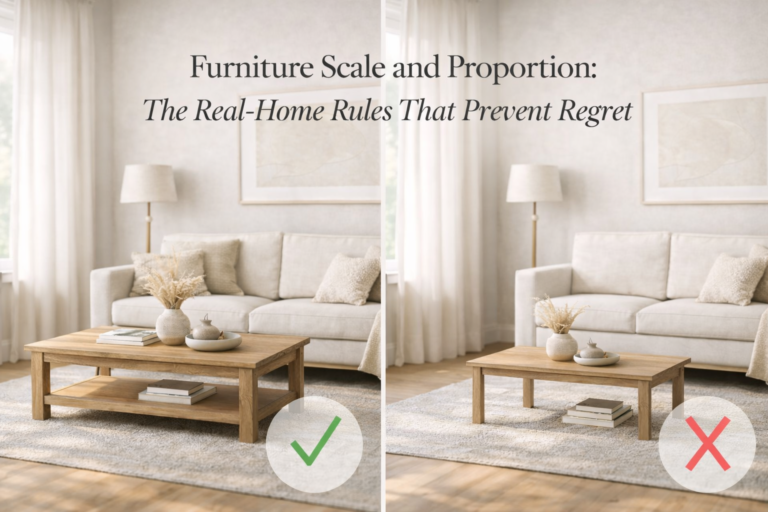
Furniture that overwhelms or underperforms its space often loses relevance. Poorly scaled furniture restricts movement, limits flexibility, and creates discomfort.
Balanced proportion allows furniture to coexist with changing layouts and evolving needs. This balance is a core factor in what makes furniture last long term.
Related reading:
https://furnituretraditions.net/furniture-proportions-in-real-homes
Adaptability Extends Usable Life
Furniture that can adapt to different contexts lasts longer. Pieces that can move between rooms, change function, or integrate with new layouts remain relevant as lifestyles evolve.
This adaptability is one of the strongest predictors of what makes furniture last long term. Furniture that resists change often becomes obsolete even if it remains physically intact.
Materials That Age Gracefully Encourage Retention
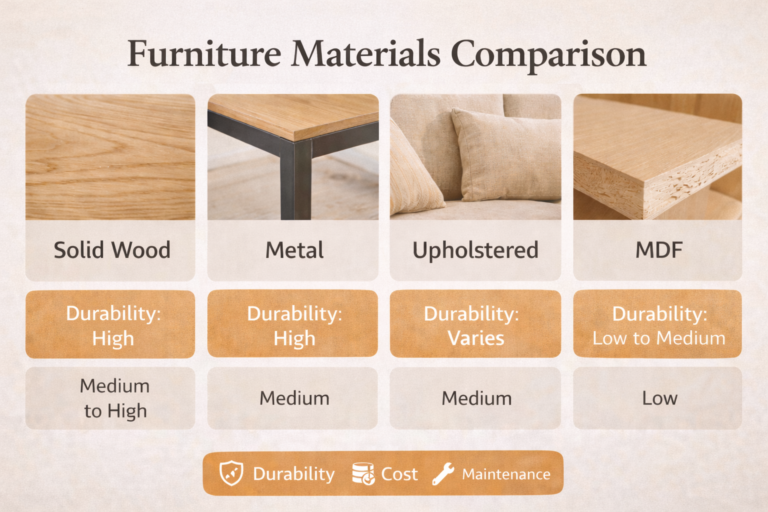
Materials that tolerate wear, develop character, and respond well to use tend to encourage long-term ownership.
Surface changes that feel natural rather than deteriorative reinforce the perception of value. This material response is central to what makes furniture last long term in lived environments.
Related reading:
https://furnituretraditions.net/how-furniture-ages-in-real-homes
Conclusion
Longevity is experiential, not theoretical.
When evaluating what makes furniture last long term, the most important factors are usability, proportion, adaptability, and material response. Furniture that supports daily life without imposing limitations earns its place over time.
What determines furniture longevity?
Structure, proportion, adaptability, and material performance over time.
Why do some furniture pieces feel outdated quickly?
Because they fail to support changing routines or layouts.
Can long-lasting furniture still look modern?
Yes. Longevity is about usability, not style.