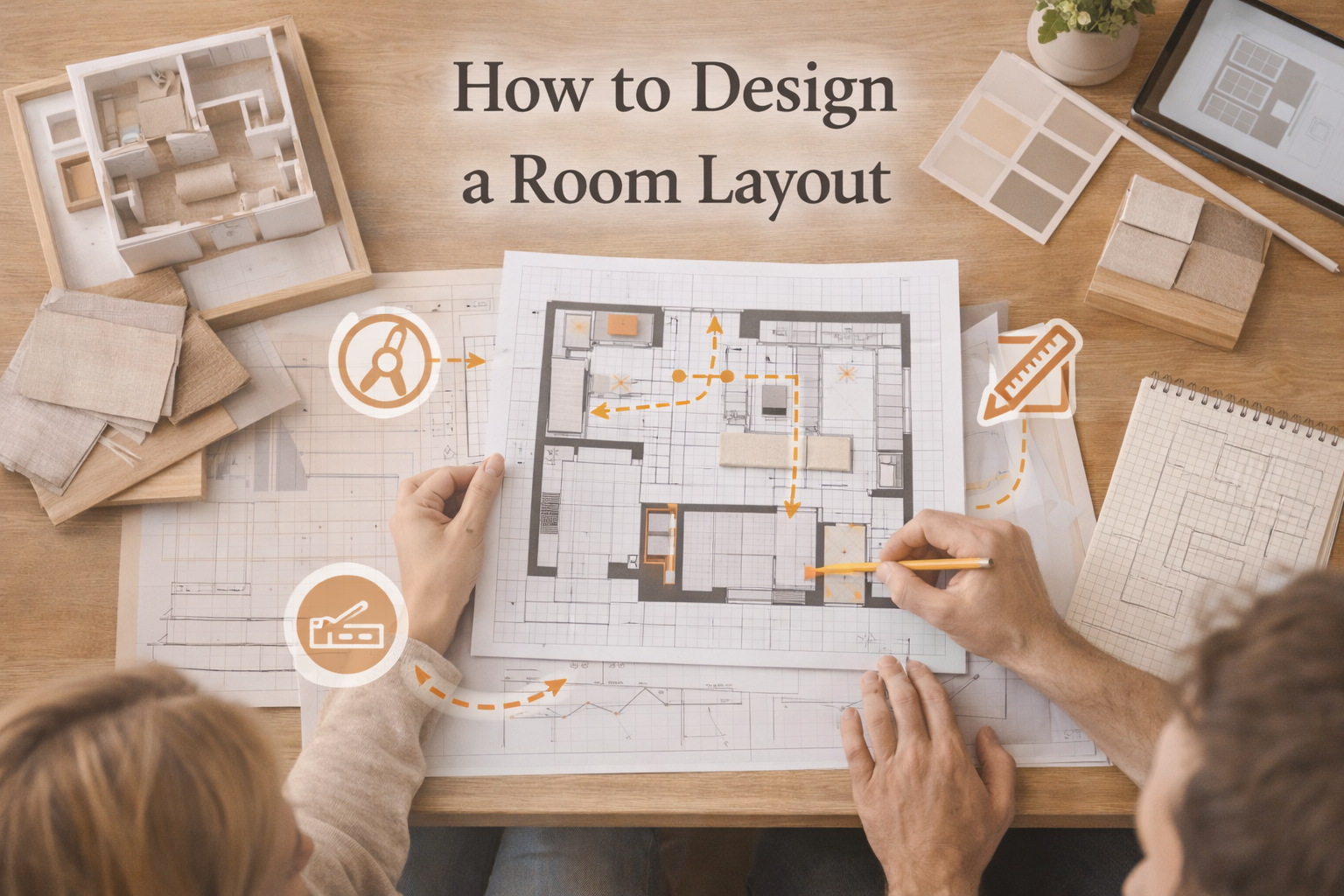
How to Design a Room Layout That Feels Natural and Functional
How to design a room layout is one of the most important interior design skills, yet it’s also the area where most homeowners feel the least confident. People often assume layout is about style or creativity. In reality, layout is about logic. It’s the structural foundation of how a home functions, and it has a direct impact on comfort, movement, and how easy it is to maintain order.
Many rooms feel uncomfortable not because the furniture is bad, but because the room is organized without a clear system. You can have a beautiful sofa, expensive lighting, and quality materials, yet the room still feels awkward if circulation is blocked, seating is disconnected, or storage is inconvenient.
A strong layout doesn’t need to be complicated. It needs to support daily behavior. It should make movement feel intuitive, allow people to sit comfortably, and create a sense of calm rather than visual chaos.
This guide explains how to design a room layout in a practical way that works for modern living, whether your space is large, small, open-plan, or irregularly shaped.
Start With the Room’s Function, Not the Furniture
The most common layout mistake is starting with furniture shopping.
People see a sofa they like or a dining table that looks impressive and then try to “make it fit.” This often leads to compromises that affect the room for years.
Instead, the first step in learning how to design a room layout is to define what the room needs to support.
Ask yourself:
- Is this room meant for rest or activity?
- Will it be used daily or occasionally?
- Is it a social space or a private space?
- Does it need to support work or study?
- Does it need storage or display areas?
Once the function is clear, layout becomes more structured. Furniture choices become easier because you understand what the room needs to do.
Related reading:
https://furnituretraditions.net/interior-design-decision-making
Identify Circulation Paths Before You Place Anything
Circulation is the invisible skeleton of a room. It determines how people enter, move, and exit.
Before you place furniture, observe:
- where the door opens
- where people naturally walk
- where windows and balconies create movement
- where access points exist (closets, cabinets, shelves)
A layout should support these paths rather than interrupt them.
If circulation is blocked, people will constantly adjust their behavior. This creates stress and makes the room feel smaller than it is.
Understanding circulation is essential to how to design a room layout because movement is the first thing people feel in a space.
Create Zones Instead of Filling Space
Rooms often feel messy when everything is treated as one area.
Even small rooms benefit from zoning. A zone can be defined by furniture orientation, rugs, lighting, or simple placement logic.
Examples of zones:
- seating zone
- reading zone
- work zone
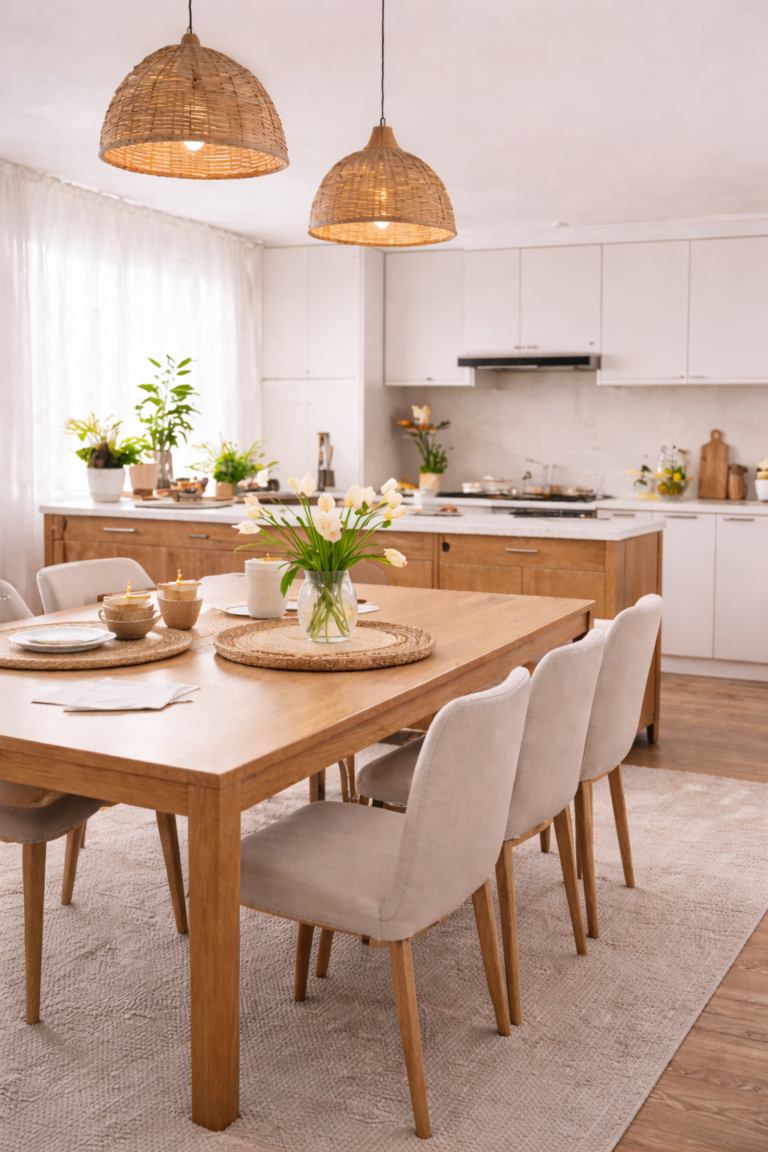
- dining zone
- storage zone
Zoning is especially important in open-plan spaces where living, dining, and kitchen areas overlap. Without zoning, open plans feel chaotic.
A room doesn’t need walls to feel organized. It needs visual and functional boundaries.
Related reading:
https://furnituretraditions.net/interior-layouts-and-daily-routines
How to Design a Room Layout Using Scale and Proportion
Furniture scale is one of the most overlooked factors in layout design.
Many people measure the room and assume that if furniture fits physically, it will work. But scale is not only about fit. It is about balance.
A sofa that is too deep can block circulation. A dining table that is too large can make seating uncomfortable. Storage that is too tall can visually dominate a room.
The best layouts are built around furniture that feels appropriate for the room’s proportions.
A practical method is to evaluate:
- ceiling height relative to furniture height
- room width relative to furniture depth
- distance between seating and focal points
- walking clearance around anchor pieces
This is why how to design a room layout is closely tied to scale decisions.
Related reading:
https://furnituretraditions.net/furniture-scale-in-real-homes
https://furnituretraditions.net/furniture-proportions-in-real-homes
Use Anchor Points to Stabilize the Layout
Every room needs an anchor point. This is the element that organizes everything else.
Anchor points can include:
- fireplace
- TV wall
- large window
- bed headboard wall
- dining table center
- built-in shelving
Once the anchor is defined, furniture placement becomes easier. Seating should face the anchor, storage should support it, and circulation should flow around it.
Rooms without anchors often feel scattered, even if they contain good furniture.
A strong anchor creates structure and visual calm.
Balance Symmetry and Practicality
Symmetry can be visually satisfying, but it can also become a trap.
People often try to force symmetrical layouts even when the room shape doesn’t support it. This leads to awkward furniture placement and wasted space.
Instead of chasing symmetry, focus on balance.
Balance means the room feels stable, even if it isn’t perfectly mirrored. Furniture weight should be distributed evenly. Seating should feel connected. Storage should be accessible.
Balance supports long-term comfort more than perfect symmetry.
This is an important mindset shift in learning how to design a room layout.
Plan Lighting Alongside the Layout
Lighting should not be an afterthought.
A room can have a good layout but still feel uncomfortable if lighting is wrong. People avoid corners that feel dark. Seating zones feel incomplete without task lighting. Work areas become frustrating without focused light.
A good layout plan includes:
- ambient lighting (general)
- task lighting (functional)
- accent lighting (optional)
Lighting also supports zoning. A reading chair becomes a reading zone when it has a lamp. A dining table becomes a dining zone when it has overhead light.
This is why layout and lighting should be planned together.
Avoid Common Layout Mistakes
Most layout mistakes are predictable:
Furniture pushed against walls
This often creates an empty center and disconnected seating.
Too many small pieces
Multiple small tables and chairs create clutter and reduce clarity.
No storage plan
Rooms become messy quickly when storage is not convenient.
Ignoring daily habits
If people naturally drop items in a certain spot, the layout should support that.
Overfurnishing
Many rooms feel crowded because furniture is added without a purpose.
Avoiding these mistakes is one of the simplest ways to improve your layout without spending money.
FAQ
How do I start designing a room layout?
Start with the room’s primary function and map circulation paths before placing furniture.
What is the biggest layout mistake people make?
Ignoring circulation and choosing furniture that blocks movement.
How do I design a layout for a small room?
Use appropriately scaled furniture, avoid over furnishing, and create one clear zone.
Do open-plan rooms need zones?
Yes. Zoning prevents open-plan spaces from feeling chaotic.
Should I plan lighting before buying furniture?
Ideally yes, because lighting affects how furniture is used and where zones should be created.
Conclusion
Learning how to design a room layout is not about copying magazine images. It is about creating a system that supports movement, comfort, and daily routines. A functional layout makes a room feel calm, spacious, and easy to live in, even if the style is simple.
When you start with function, plan circulation, respect scale, and build clear zones, layout becomes far less intimidating, and your home becomes far more comfortable.