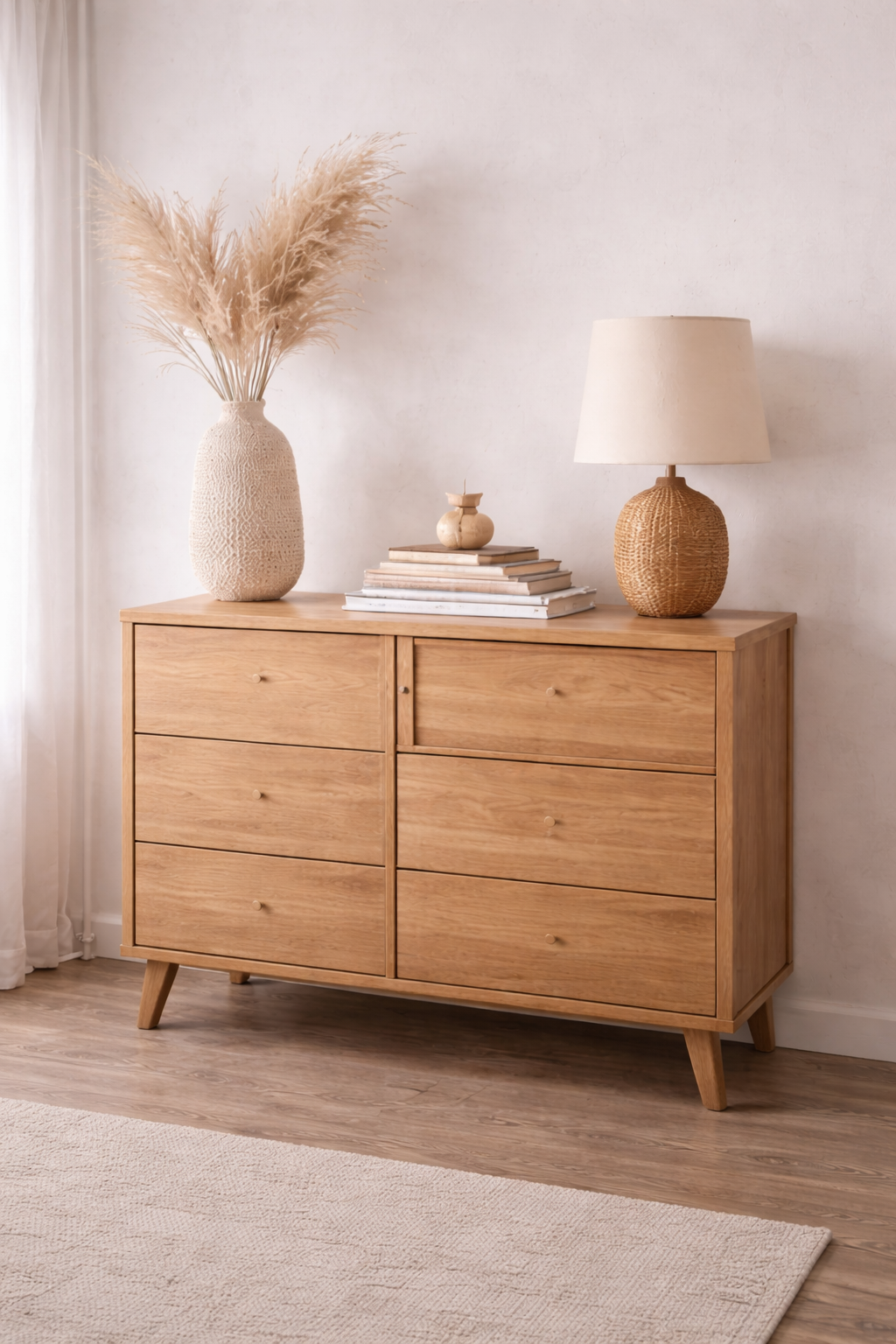
Furniture: A Practical Guide To Choosing, Buying, And Caring For Every Room
Furniture is one of those purchases that feels simple, until it isn’t. A sofa looks perfect online, then arrives and somehow blocks the walkway. A “solid wood” table turns out to be veneer over particleboard. A gorgeous dining chair becomes the seat nobody wants after 20 minutes.
The good news: choosing the right furniture isn’t about having perfect taste or an unlimited budget. It’s about making a few smart decisions in the right order, function first, then fit, then quality, then style. In this practical guide, we’ll walk through how furniture shapes a space, what to look for across the core furniture types, how to spot better construction, and how to keep pieces looking great for years.
What Furniture Does For A Space (Function, Comfort, And Style)
Furniture isn’t just “stuff in a room.” It’s the system that determines how we live in that room, where we sit, where we set things down, how we move, and whether a space feels calm or cluttered.
When we choose furniture well, a room works almost invisibly. When we choose it poorly, we notice every day: cramped walkways, awkward corners, not enough storage, nowhere to put a drink, a bed frame that squeaks at 2 a.m. Practical furniture decisions are what make a home feel easy.
How Furniture Choices Affect Flow And Usability
Flow is simply the path we take through a space. The best furniture layout protects that path.
A few examples we use when evaluating furniture placement:
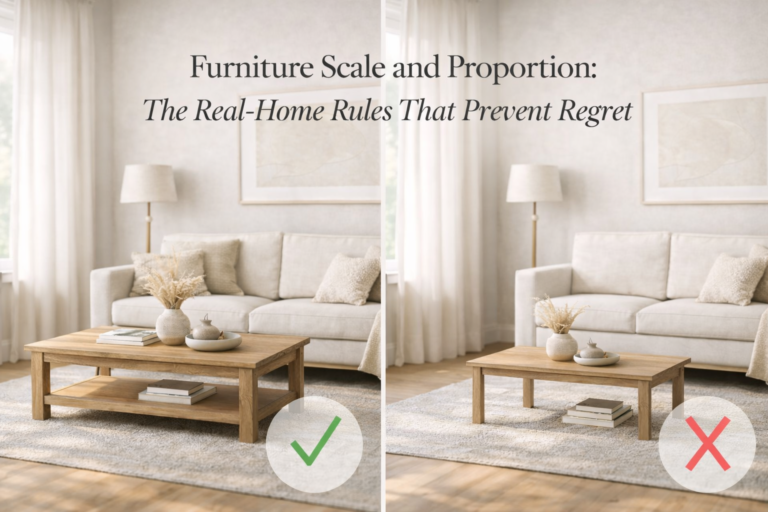
- Living rooms: We want a clear route from entry to seating without cutting through the “conversation zone.” A coffee table that’s too large forces people to sidestep around it constantly.
- Dining areas: Chairs need room to slide back. If the table is oversized for the room, the whole area becomes a squeeze.
- Bedrooms: Nightstands that are too wide can pinch the walkway: dressers that are too deep can block drawers from opening fully.
Good furniture choices also support “micro-uses.” If we always set our keys on the counter, a narrow console table near the door is functional furniture, not décor. If we work on the couch, we might need a side table with the right height and a task light. These tiny behaviors add up.
Balancing Practical Needs With Visual Cohesion
Style matters, but cohesion is what makes a room feel intentional. We can mix different looks, modern with vintage, rustic with clean-lined, if we repeat a few unifying elements:
- Consistent undertones in wood finishes (warm vs. cool)
- A limited metal palette (for example, mostly black hardware, or mostly brass)
- Repeatable shapes (curves echoed across mirror frames, chairs, and lamps)
- A clear “anchor” piece (often a sofa, bed, or dining table)
The trick is not to match everything. A room that’s too coordinated can feel like a showroom. Instead, we aim for furniture that shares a common thread, scale, material, or color temperature, so it reads as one space even if it’s collected over time.
Core Furniture Types And How To Choose Them
Most homes rely on a predictable set of furniture categories. If we get these right, everything else becomes easier, rugs fit better, lighting falls into place, and storage stops being an afterthought.
Seating: Sofas, Chairs, And Sectionals
Seating is where comfort meets durability head-on. We usually evaluate seating in this order:
- Size and layout: A sectional can be a lifesaver in an open-plan room, but it can also “lock” the layout if the chaise is on the wrong side. If the room is narrow, a standard sofa plus two chairs often keeps the space flexible.
- Seat depth and height: Deep seats are great for lounging, but they’re not everyone’s favorite for upright sitting. If we’re shopping for a shared space, a medium depth tends to please more people.
- Cushion feel and support: We look for consistent support across the seat (no hammocking) and cushions that bounce back.
- Upholstery choice: If we have pets or kids, performance fabrics and tighter weaves are worth prioritizing.
A practical tip: if a retailer lists seat depth, seat height, and cushion fill, that’s usually a sign they take product specs seriously.
Tables: Dining, Coffee, Side, And Desks
Tables do a lot of “unseen work.” The best ones fit our habits.
- Dining tables: We decide on shape based on the room and how we host. Rectangular tables maximize seating: round tables make conversation easier and can be kinder in tight spaces.
- Coffee tables: We aim for a height close to the sofa seat height (or slightly lower). Too high feels clunky: too low becomes a reach.
- Side tables: These are underrated. A room feels instantly more livable when every seat has a place for a drink and a phone.
- Desks: We prioritize depth if we use a monitor and keyboard. A shallow desk looks sleek, but it can force poor ergonomics.
Materials matter here, too: stone and glass are beautiful, but they show smudges and chips differently than wood or laminate. We choose based on how much “real life” the surface will see.
Storage: Dressers, Cabinets, Shelving, And Media Units
Storage furniture is about reducing visual noise. When storage is insufficient, everything becomes “temporary clutter”, and somehow stays that way.
We like to split storage choices into two types:
- Closed storage (dressers, cabinets, media consoles): best for anything we don’t want to look at daily.
- Open storage (shelving, bookcases): best for curated items, books, baskets, a few objects that add personality.
For media units specifically, we check:
- Ventilation (especially for consoles and routers)
- Cable management (cutouts, channels, or space behind)
- Depth for larger components
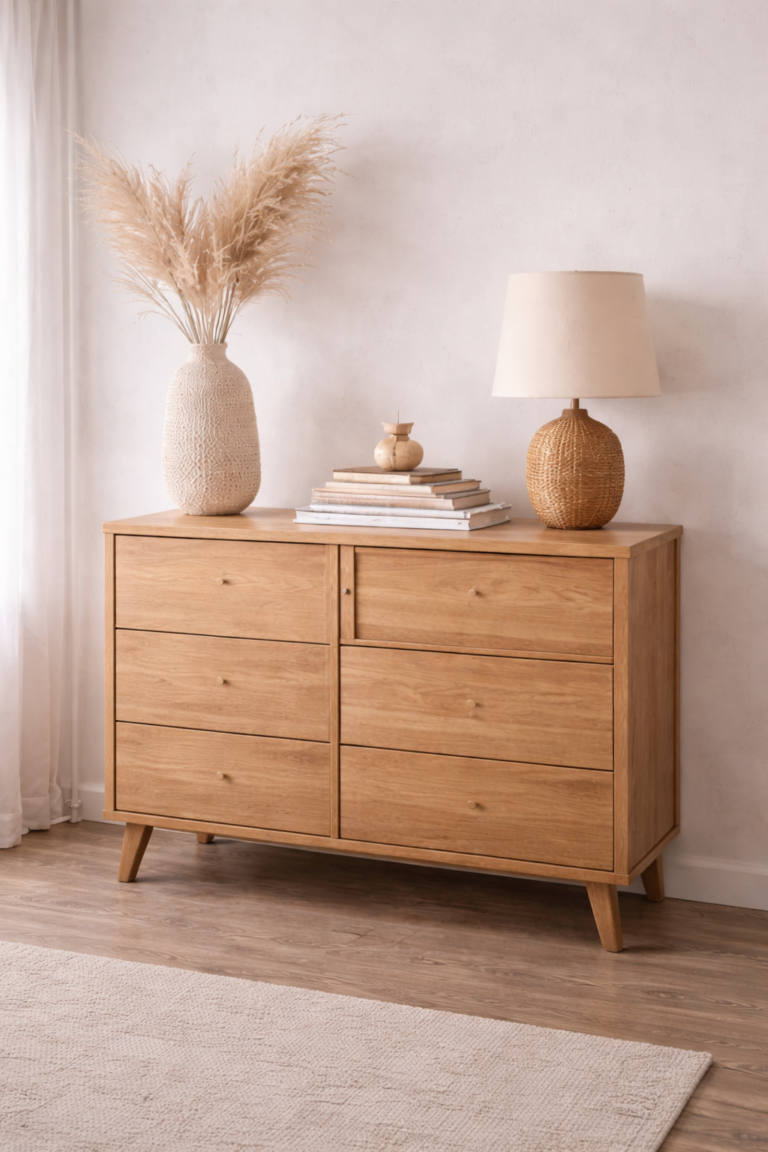
And for dressers and cabinets, we look for smooth drawer slides, stable backs, and a sturdy base, because storage furniture gets opened and closed constantly.
Materials And Construction That Determine Quality
Furniture quality is rarely about a single detail, it’s the combination of materials, joinery, support systems, and finishing. Two pieces can look identical in photos and perform completely differently after a year of use.
Wood, Metal, Upholstery, And Composites
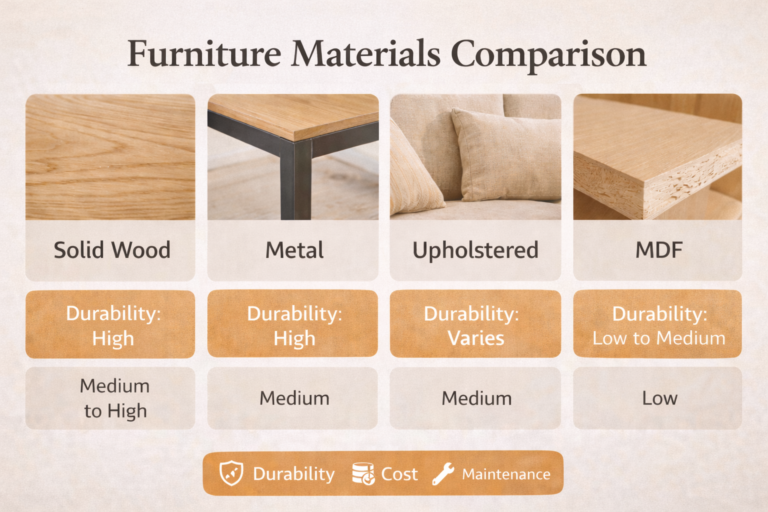
Here’s how we think about common furniture materials:
- Solid wood: Durable, repairable, and often long-lasting. It can expand and contract with humidity, so good construction matters.
- Engineered wood (plywood): Often a strong choice, especially for panels and cabinet boxes. Quality plywood can outperform cheap “solid wood” pieces assembled poorly.
- MDF and particleboard: Not automatically “bad,” but quality varies widely. These materials are most vulnerable to moisture and can fail at stress points (like screw holes) if underbuilt.
- Metal: Great for frames and bases when properly welded and finished. We look for even welds and a powder-coated finish for scratch resistance.
- Upholstery: Fabric durability depends on weave, fiber content, and finishing. Leather varies dramatically as well, full-grain and top-grain generally age better than heavily corrected leathers.
A quick reality check: “wood” in a product description can mean almost anything. We look for specificity, species, veneer over what core, and what parts are solid vs. engineered.
Joinery, Frames, Cushions, And Hardware
Construction details are where quality shows up.
- Joinery: Dovetail joints in drawers and mortise-and-tenon in frames are strong indicators of better build. Staples and nails aren’t inherently wrong, but they shouldn’t be the primary structure on pieces meant to last.
- Frames (especially sofas): Hardwood or quality plywood frames tend to hold up better than softwood frames with minimal bracing.
- Support systems: Sinuous springs can be excellent when properly gauged and attached: eight-way hand-tied is a premium method, though not required for every budget.
- Cushions: High-resiliency (HR) foam and well-designed foam/fiber wraps usually keep shape longer than low-density foam. If cushions aren’t reversible, we accept that wear will show sooner.
- Hardware: Drawer glides, hinges, and adjustable levelers matter more than we think. Soft-close hardware is nice, but sturdiness and alignment are the real test.
If we’re shopping in person, we do a couple of unglamorous checks: gently rack the piece side-to-side (it shouldn’t wobble), open drawers fully (they should track smoothly), and sit in multiple spots on a sofa (support should feel consistent).
Measurements, Layout, And Fit Before You Buy
This is the part people skip, then regret. Most furniture “fails” because it doesn’t fit: not just the room, but the routes into the room and the clearances needed to use it comfortably.
Key Dimensions To Measure (Including Doorways And Stairs)
Before we order furniture, we measure more than floor space.
Our basic measurement checklist:
- Room dimensions (length, width, ceiling height)
- Doorway widths and heights (including the narrowest point)
- Hallway width and turning points
- Stair width and ceiling clearance on landings
- Elevator dimensions if applicable
- Entry obstacles like tight corners, railings, light fixtures, or low ceilings
Then we compare those numbers to the furniture’s overall dimensions and, for bulky items, the packaging dimensions. Some pieces arrive assembled: others come in manageable boxes. That difference can decide whether delivery is painless or a complete headache.
Clearances And Spacing Rules For Common Rooms
We don’t need perfection, but we do need breathing room.
Common spacing guidelines we rely on:
- Walkways: Aim for about 30–36 inches for main paths when possible. Tighter can work in small spaces, but it will feel noticeable.
- Sofa to coffee table: Roughly 14–18 inches is a comfortable reach zone for most people.
- Dining table clearance: Try for 36 inches from table edge to wall or furniture so chairs can slide out. If there’s a walkway behind seated diners, 44–48 inches feels much better.
- Bed clearance: Around 24–36 inches on the sides helps the room feel usable (nightstands, making the bed, opening drawers).
One tactic we love: we “tape it out” with painter’s tape on the floor (or use cardboard). Seeing the footprint at full scale reveals problems photos and measurements don’t, like how a dresser blocks the closet door swing or how a sectional steals the natural walking path.
Where To Buy And How To Compare Value
Buying furniture is rarely just a question of price. Value comes from the intersection of comfort, durability, materials, warranty, and how long we expect to keep the piece.
New Vs. Used Vs. Custom: Pros And Cons
Each buying route has a smart use case.
- New furniture: Easiest for consistent sizing, coordinated collections, and modern performance fabrics. We often get clearer specs and predictable delivery. The downside is that quality can vary wildly at the same price point.
- Used furniture: Great for solid wood pieces, vintage styles, and higher-end brands at a discount. We inspect carefully for odors, structural issues, pests, and upholstery wear. For items like dining tables, dressers, and nightstands, used can be a home run.
- Custom furniture: Best when our space has unusual constraints (tight dimensions, built-ins, specific fabrics) or when we want heirloom quality. It typically costs more and takes longer, but we get exactly what fits.
A balanced approach often works best: invest in key daily-use pieces (sofa, mattress, desk chair), and save with used or budget options where wear is lower (accent tables, nightstands, some storage).
Delivery, Assembly, Warranties, And Return Policies
The hidden costs of furniture shopping show up here.
Before buying, we check:
- Delivery type: Threshold vs. room-of-choice vs. white-glove (unpacking + assembly). If a piece is heavy or delicate, white-glove can be worth it.
- Assembly complexity: “Some assembly required” can mean anything from attaching legs to building an entire cabinet. We look for reviews that mention assembly time and alignment issues.
- Return window and fees: Furniture returns can involve restocking fees and return shipping costs. We confirm who pays for what.
- Warranty coverage: We read what’s excluded (normal wear, fabric pilling, finish scratches) and what’s covered (frames, springs, mechanisms). Longer warranties matter most when the piece is built to last.
One more practical metric: we think in “cost per year.” A $1,200 sofa that lasts 10 years often beats a $700 sofa that needs replacing in three, especially when delivery fees, hassle, and waste are part of the real cost.
Care, Cleaning, And Long-Term Maintenance
Furniture lasts longer when we treat it like a tool, not a museum piece. Most maintenance is small, occasional, and preventative, and it keeps the expensive problems away.
Protecting Surfaces And Fabrics From Everyday Wear
We don’t have to baby furniture, but we do need a few habits:
- Use coasters and trivets on wood and stone to prevent heat marks and rings.
- Add felt pads under chairs and table legs to avoid floor scratches and wobble.
- Rotate cushions (and flip them if they’re reversible) to even out wear.
- Keep upholstery out of direct sun when possible, UV light fades fabric and leather faster than most people expect.
- Vacuum upholstered furniture using a soft brush attachment. Dust and grit act like sandpaper on fibers.
For cleaning, we follow the manufacturer’s codes when provided (common upholstery codes include W for water-based cleaners and S for solvent-based). And we spot-test in an inconspicuous area first, because the fastest way to “clean” a sofa is to bleach a visible patch by accident.
Fixes And Refreshes: Tightening, Touch-Ups, And Reupholstery
Furniture maintenance isn’t glamorous, but it’s satisfying.
A few simple refreshes that extend life:
- Tighten screws and hardware once or twice a year (chairs, bed frames, drawer pulls). The small wobble we ignore today becomes the broken joint we pay for later.
- Address scratches early: Furniture markers, wax sticks, and touch-up kits can make a surprising difference on wood finishes.
- Replace or upgrade inserts: Drawer glides, hinges, and even table levelers can be swapped when they wear out.
- Reupholstery or slipcovers: If a sofa frame is solid but the fabric is tired, reupholstery can be cost-effective, especially for higher-quality seating. Slipcovers are a lighter lift and can be great for washable practicality.
We also keep an eye on environment: stable humidity helps wood furniture behave. Extremely dry winters and humid summers can cause seasonal movement, so using a humidifier or dehumidifier (depending on climate) isn’t just for comfort, it can protect furniture, too.
Conclusion
Furniture decisions get easier when we stop treating them like isolated purchases. A sofa isn’t just a sofa, it’s a traffic pattern, a comfort level, a cleaning routine, and a long-term cost. The same goes for tables, storage, and everything in between.
If we do three things consistently, we tend to end up with furniture we genuinely like living with: measure before we buy, prioritize construction where it matters most, and choose materials that match our real life (not our fantasy life). Then we maintain the pieces we already own, tighten, protect, clean thoughtfully, so our home feels better year after year.
When we approach furniture this way, the end result isn’t just a nicer room. It’s a home that works.
What should I consider before buying furniture?
Before buying furniture, consider how the piece will be used, whether it fits the room and walkways, the quality of materials and construction, and how easy it will be to maintain. Measuring the space and understanding your daily habits helps prevent costly mistakes.
Is solid wood furniture always better?
Not necessarily. Solid wood can be durable and long-lasting, but well-made plywood or engineered wood can perform just as well, or better, when properly constructed. Quality depends more on joinery, frame strength, and overall build than on one material alone.
How long should good furniture last?
Well-made furniture should last many years with proper care. Sofas and seating can last 7–15 years depending on construction and use, while solid storage pieces and tables can last decades. Regular maintenance and choosing durable materials significantly extend lifespan.