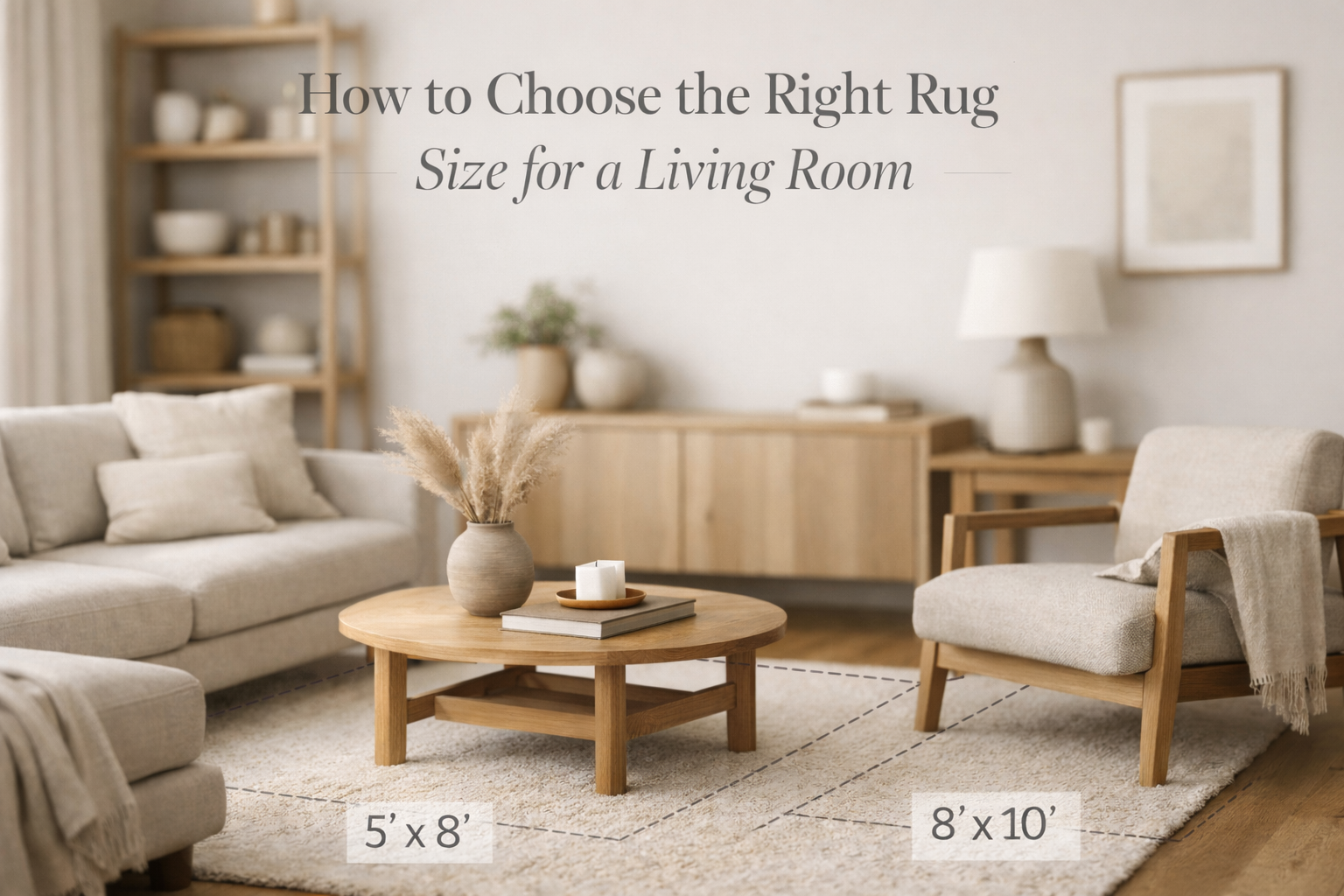
How to Choose the Right Rug Size for a Living Room
How to choose the right rug size is one of the most underestimated decisions in living room design. Many homeowners focus on color and pattern first, assuming the visual style matters most. In reality, size has a far greater impact on whether a room feels balanced or awkward.
A rug that is too small makes furniture appear disconnected. A rug that is too large can swallow the space or feel disproportionate. Even beautifully designed living rooms can feel unfinished when rug dimensions are wrong.
Rug size is not just a decorative choice. It is a structural design decision that affects scale, proportion, and spatial cohesion.
In this guide, we will break down how to choose the right rug size in a way that improves the entire layout of your living room.
Why Rug Size Affects the Entire Room
A rug visually connects furniture pieces. Without proper sizing, seating arrangements look fragmented.
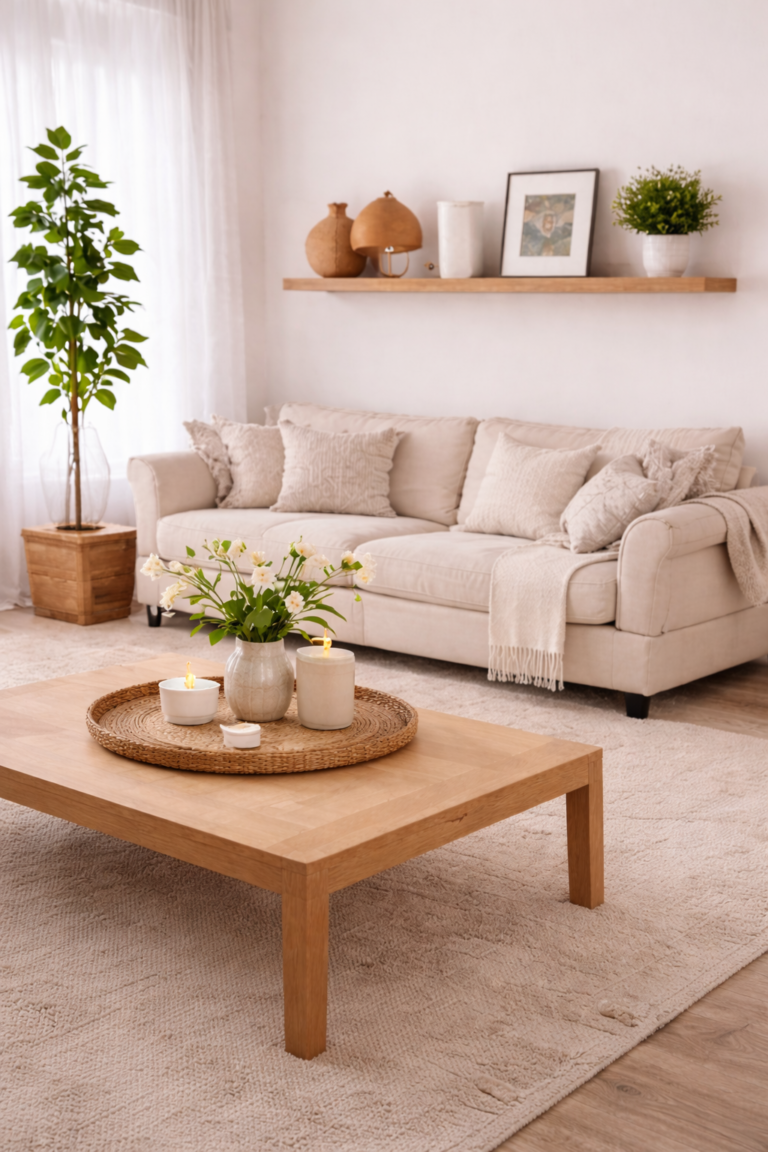
When a rug is undersized, the eye reads each furniture piece as separate. The sofa floats. Chairs feel disconnected. The coffee table appears isolated.
Proper sizing creates a visual anchor. It defines the conversation area and makes the room feel intentional rather than assembled.
This directly relates to understanding furniture scale and proportion, because rugs influence how large or small furniture appears within a space.
The Most Common Rug Sizing Mistake
The most common mistake is choosing a rug that only fits under the coffee table.
This usually happens because smaller rugs are less expensive and easier to place. However, a small central rug rarely anchors the seating arrangement properly.
When only the coffee table sits on the rug, the surrounding furniture visually escapes the defined zone. The layout feels unstable.
A rug should connect major seating pieces, not float independently.
The “Front Legs On” Rule
One practical guideline when learning how to choose the right rug size is the front-legs-on approach.
In most living rooms:
• the front legs of the sofa should sit on the rug
• the front legs of chairs should sit on the rug
• the coffee table should sit fully on the rug
This creates visual cohesion without requiring an oversized rug that fills the entire room.
The rug becomes the platform that unifies the seating area.
When to Use a Fully Anchored Rug
In larger living rooms, a fully anchored rug may work better.
This means all furniture legs sit completely on the rug.
This approach works when:
• the room is spacious
• the seating area is clearly defined
• you want a strong visual boundary
A fully anchored rug often creates a more formal and structured look.
In smaller rooms, however, forcing all legs onto the rug may require a size that overwhelms circulation space.
Measuring Before You Buy
Many rug sizing issues come from guessing rather than measuring.
Before purchasing:
- Measure the seating area width and depth
- Mark rug dimensions on the floor using painter’s tape
- Walk through the space to test circulation
This simple step prevents proportion mistakes.
Rug size should support the layout, not restrict movement. If pathways feel tight, the rug may be too large for the room.
Understanding how to design a room layout that feels natural and functional helps determine where the rug should begin and end.
Rug Size in Small Living Rooms
In compact spaces, the goal is cohesion without crowding.
A rug that is too small fragments the room. A rug that extends wall to wall may make the room feel boxed in.
In small living rooms, a medium-large rug that connects primary seating pieces usually creates the best balance.
If the room already feels tight, avoid heavy dark rugs that absorb light and compress perception. Lighter tones can help maintain visual openness.
This connects closely to solving issues discussed in why does my living room feel crowded, where proportion errors often create visual compression.
How Rug Shape Changes Perception
Size is not the only variable. Shape matters.
Rectangular rugs work best in rectangular rooms because they reinforce architectural lines.
Round rugs can soften rigid layouts but should be large enough to support surrounding furniture. Small round rugs often feel decorative rather than structural.
The rug should echo the geometry of the room, not fight it.
Rug Placement and Wall Distance
Rugs do not need to touch walls.
Leaving a border of visible flooring around the rug often improves proportion. This frame of floor space prevents the rug from feeling undersized or overly dominant.
Consistency matters more than exact measurement. Equal spacing around the rug perimeter creates visual stability.
Layering Rugs for Flexibility
In some layouts, layering can work effectively.
A larger neutral base rug can anchor the seating area, while a smaller textured rug adds warmth or character.
Layering works best when the base rug establishes correct proportion first. Decorative layering should never compensate for incorrect sizing.
FAQ
What size rug is best for a standard living room?
In many average-sized living rooms, rugs between 240×300 cm or 200×290 cm work well, but the correct size depends on your seating arrangement.
Should a rug go under the sofa?
At least the front legs should sit on the rug to visually connect the seating area.
Can a rug be too big?
Yes. If a rug restricts pathways or feels wall-to-wall without intention, it may overpower the space.
Is it better to go bigger or smaller with a rug?
Slightly larger is usually safer than too small, as undersized rugs fragment the room.
Does rug color affect how large a room feels?
Yes. Lighter rugs generally reflect light and can make a space feel more open.
Conclusion
Learning how to choose the right rug size is less about decoration and more about proportion. A properly sized rug anchors furniture, defines layout, and creates cohesion across the room.
When rug dimensions align with seating scale and circulation flow, the entire living room feels more intentional, balanced, and comfortable even without changing a single piece of furniture.