How to Make a Home Feel Cohesive Without Matching Everything
How to make a home feel cohesive is one of the most valuable interior design skills because cohesion affects how a space feels emotionally. A cohesive home feels calm, intentional, and complete. A non-cohesive home feels unfinished, even if the furniture is expensive and the decor is stylish.
Many people assume cohesion means everything must match. The same colors, the same style, the same finishes. In reality, matching everything often creates a flat, artificial look.
Cohesion is not about repetition without variation. It is about creating a visual and functional relationship between pieces. A cohesive home can include different styles, eras, and materials as long as there is an underlying structure.
This guide explains how to make a home feel cohesive without forcing your space into a rigid theme.
Why Homes Lose Cohesion Over Time
Most homes start with a clear direction. When people first move in, furniture decisions are usually intentional. The space is relatively empty, so each purchase feels deliberate, and the overall look comes together naturally.
Over time, however, the home evolves and that’s where cohesion often starts to fade.
Pieces are added gradually: a new chair that seemed like a good deal, a second-hand table that fills an immediate need, a different rug that works better for the season, temporary storage that becomes permanent, or small decorative items picked up over time. Each addition may be attractive on its own, but when these choices aren’t filtered through the same design logic, the room can slowly lose its sense of structure.
This is why cohesion isn’t a one-time decision. It’s an ongoing process of alignment. A home stays cohesive when new purchases support the existing system instead of competing with it.
Understanding how to make a home feel cohesive often comes down to learning how to make decisions with consistency especially when the space is changing. That’s why it helps to approach new additions through a clear framework, like the one outlined in our guide to interior design decision making.
Cohesion Comes From Repetition, Not Matching
The most powerful cohesion tool is repetition.
Repetition can be created through:
- repeated wood tones
- repeated metal finishes
- repeated fabric textures
- repeated shapes
- repeated proportions
This does not mean identical items. It means elements echo each other.
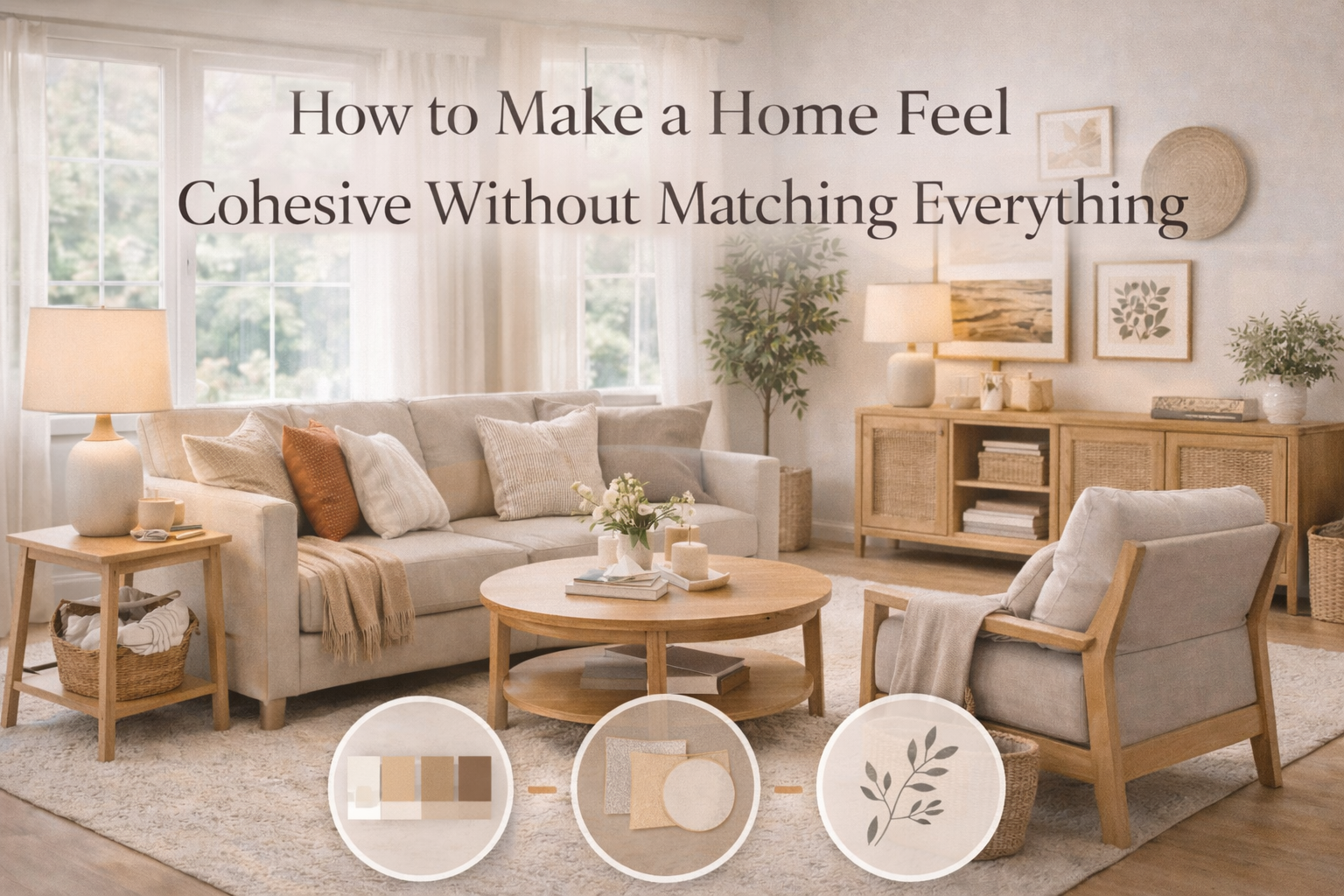
For example, you can mix a modern sofa with a vintage table if the wood tone appears elsewhere in the room. You can mix warm and cool colors if the overall palette repeats consistently.
Repetition gives the brain a sense of order.
Proportion Creates Cohesion Automatically
One of the most underrated elements of a cohesive home is proportion. People often focus on color palettes or decor style, but proportion quietly determines whether a space feels balanced or visually unstable.
Rooms feel cohesive when furniture carries a consistent sense of scale and visual weight. When one piece is oversized while everything else feels small or lightweight, the room can feel unsettled, even if every item is attractive on its own. The same issue happens when furniture heights vary too dramatically. A low sofa paired with a tall shelving unit and an oversized lamp can create visual tension that makes the room feel disorganized, even if the layout is technically correct.
This is why learning how to make a home feel cohesive often comes down to scale. The goal isn’t perfect matching it’s harmony. When furniture proportions feel intentional, the entire room naturally feels calmer and more unified.
If you want to understand this more deeply, our guides on furniture scale in real homes and furniture proportions in real homes break down the most common proportion mistakes and how to avoid them before they disrupt the overall design.
Material Consistency Is More Important Than Color
Many people try to build cohesion through color alone. Color helps, but materials often matter more.
A room with mixed wood tones, mixed metal finishes, and mixed upholstery textures can feel disjointed even if the color palette is neutral.
A room with consistent materials can feel cohesive even if colors vary.
If you want cohesion, choose a limited number of material families:
- one dominant wood tone
- one metal finish (or two at most)
- one upholstery texture family
- consistent flooring logic
This reduces visual noise and makes the room feel intentional.
Create Cohesion Through “Design Rules”
Professional designers rarely make decisions randomly. They use rules.
Examples of simple cohesion rules:
- no more than two wood tones per room
- one dominant neutral + one accent color
- consistent furniture leg style (modern vs heavy)
- repeated curves or repeated straight lines
- consistent lighting temperature (warm vs cool)
These rules prevent impulse purchases from breaking the space.
This is one of the best practical strategies in how to make a home feel cohesive.
Use Lighting as a Cohesion Tool
Lighting is often ignored, but it strongly influences cohesion.
A room with mixed lighting temperatures (cool white and warm yellow) feels inconsistent. A room with consistent lighting style feels intentional.
Lighting cohesion comes from:
- similar fixture finishes
- consistent bulb temperature
- balanced distribution of light sources
Lighting also reinforces zones and creates emotional calm.
FAQ
How do I make a home feel cohesive quickly?
Start by reducing material variety: limit wood tones and metal finishes, and use repeated textures.
Do all furniture pieces need to match?
No. Cohesion comes from repetition and proportion, not identical items.
What is the biggest reason homes feel disjointed?
Too many unrelated materials, inconsistent scale, and impulse purchases without a design framework.
Can I mix modern and traditional furniture?
Yes, as long as you repeat key materials and maintain balanced proportions.
How do I keep cohesion when adding new furniture?
Use a rule-based approach: check material tone, proportion, and whether it supports existing repetition patterns.
Conclusion
Learning how to make a home feel cohesive is not about copying a single style or forcing every piece to match. Cohesion is created through repetition, proportion, and material consistency. When these elements align, a home feels calm and intentional even if it includes different styles and personal history.
A cohesive home is not perfect. It is simply organized visually and functionally, so everyday life feels smoother and the space feels complete.