Interior Design and Daily Behavior Shape How Spaces Truly Function
Interior design is often approached as a visual discipline. Layouts are planned for balance, symmetry, and coherence. Yet once people begin living in a space, behavior becomes the dominant force shaping how interiors function.
Interior design and daily behavior are inseparable. The way people move, rest, work, and store items gradually transforms even the most carefully designed space.
Recognizing this relationship helps explain why interiors rarely remain unchanged after the first year.
Behavior Reveals Design Assumptions
Design plans are based on assumptions about how a space will be used. Daily behavior often challenges these assumptions.
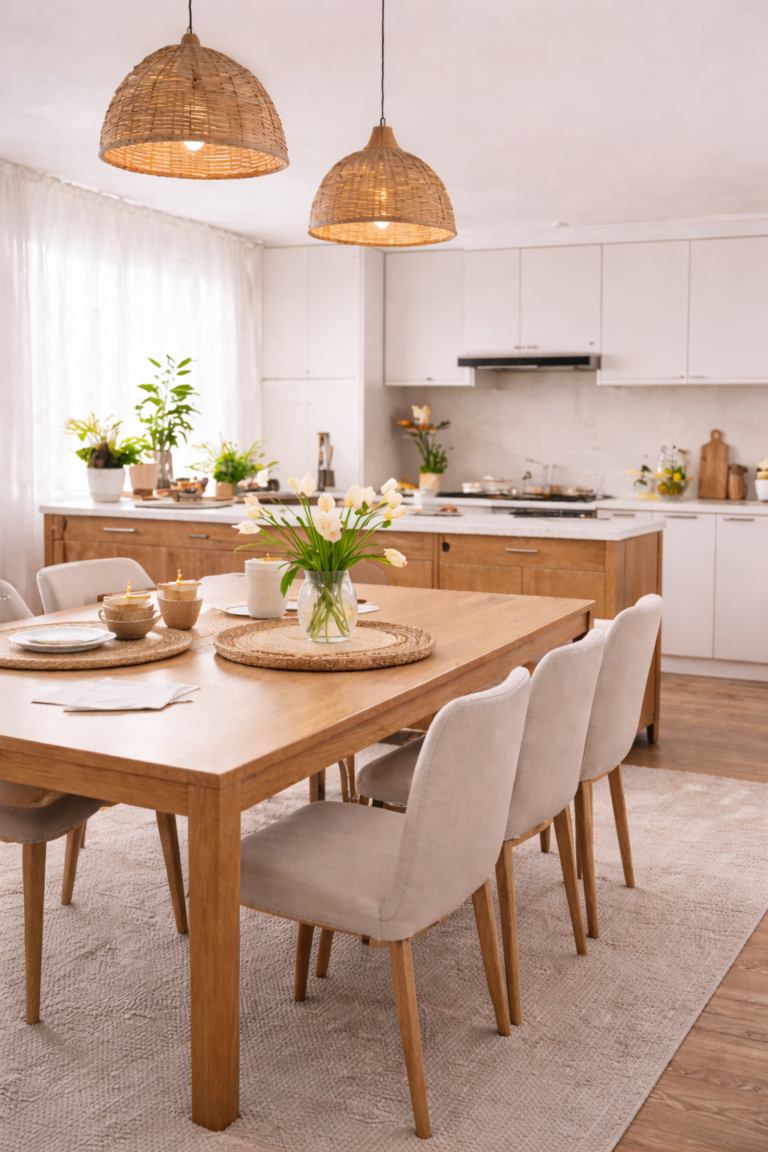
A dining area becomes a workspace. A hallway becomes a drop zone. A living room becomes a multifunctional environment. These shifts illustrate how interior design and daily behavior interact continuously.
Spaces that allow this interaction without friction tend to age better than those designed for a single purpose.
Related reading:
https://furnituretraditions.net/interior-design-in-real-homes
Layouts Adapt to Repetition, Not Occasional Use
Occasional use rarely defines a space. Repetition does.
Daily routines create wear patterns, preferred paths, and habitual zones. Furniture placement evolves accordingly, often drifting away from original symmetry toward practical alignment.
This adaptation process highlights the influence of interior design and daily behavior on long-term functionality.
Scale and proportion influence how easily this adaptation occurs.
Related reading:
https://furnituretraditions.net/furniture-scale-in-real-homes
Storage Needs Follow Behavior, Not Plans
Storage is frequently underestimated during the design phase. Daily behavior reveals what needs to be accessible, hidden, or relocated.
As storage demands increase, interiors change. Shelving is added, furniture is repurposed, and layouts are adjusted to accommodate reality.
Understanding interior design and daily behavior means acknowledging that storage is behavioral infrastructure, not decoration.
Flexibility Determines Longevity
Rigid interiors require constant effort to maintain. Flexible interiors adapt naturally.
Designs that allow furniture to move, spaces to shift function, and layouts to evolve tend to remain comfortable over time. This flexibility supports the natural progression of interior design and daily behavior.
Conclusion
Interior design does not end with installation.
When interior design and daily behavior are considered together, spaces evolve in ways that support real use rather than resisting it. The most successful interiors accommodate change instead of attempting to prevent it.
Why do interiors change after people move in?
Because daily behavior reveals practical needs not visible during planning.
Is behavioral change a failure of design?
No. It is a natural part of lived environments.
Can interiors be designed to adapt better?
Yes, by prioritizing flexibility and multipurpose use.