Interior Design in Real Homes Works Differently Than Inspiration Images
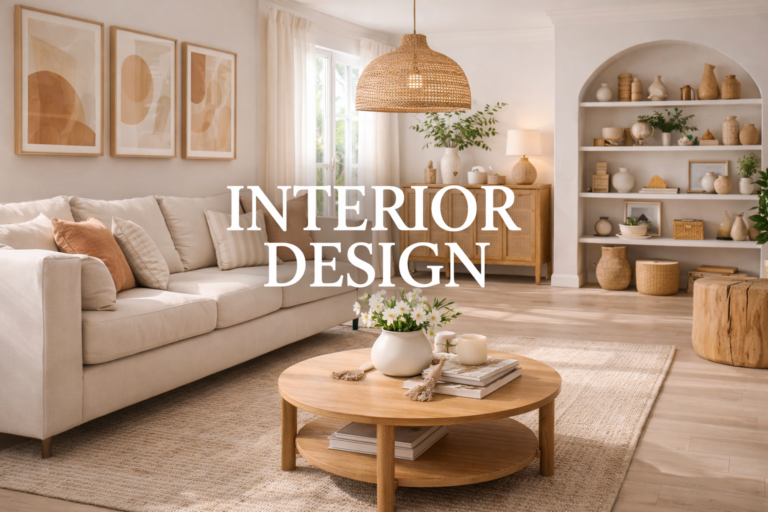
Interior design in real homes is shaped by people, not perfection. While inspiration images present clean, controlled environments, real homes introduce movement, personality, and unpredictability.
This gap between inspiration and reality is where most design frustration begins – and where good design proves its value.
Understanding interior design in real homes helps shift expectations from idealized visuals to livable solutions.
Interior Design in Real Homes Evolves Over Time
Interior design doesn’t end on move-in day. In fact, that’s usually when it truly begins.
Once people settle into a space, the home starts responding to real routines. Furniture shifts slightly to improve flow. Surfaces begin to collect everyday items. Storage solutions evolve. Even the way light moves through the room becomes more noticeable as seasons change. What felt “unfinished” in the first weeks may gradually start to feel balanced, simply because the room becomes lived in.
At the same time, the opposite can also happen. A layout that looked perfect at first clean lines, ideal symmetry, a curated look may start to feel restrictive once daily life takes over. A room can be visually beautiful but still fail in real use if it doesn’t support movement, comfort, and flexibility.
That evolution is not a design mistake. It’s a normal part of living in a real home. And it’s exactly why interior design should be treated as a flexible system rather than a rigid plan. The best interiors are the ones that improve over time, adapting naturally instead of resisting change.
If you want a deeper look at why this happens, it helps to understand the most common real home interior design challenges that appear after the first few months. It also ties closely into how circulation works in everyday spaces, which we break down in our guide to interior layouts and daily routines.
Real Layouts Create Design Constraints
Interior design plans often assume symmetry, clean proportions, and ideal room geometry. In real homes, those conditions are rare. Most spaces come with built-in limitations that quietly shape what will and won’t work.
Structural elements like radiators, support columns, and uneven wall lengths can disrupt even the most thoughtful design concept. Window placement can limit furniture positioning. Door swings can remove usable wall space. And in many homes, rooms are expected to serve multiple purposes at once living room, workspace, dining zone, and storage area all sharing the same footprint.
Because of these constraints, interior design in real homes often prioritizes function over visual perfection. A layout that feels comfortable and supports daily movement will almost always outperform a layout that looks symmetrical but creates friction in everyday use.
Furniture choice plays a major role in how well a design adapts. Pieces that are correctly scaled and flexible in placement make the room easier to adjust over time, while oversized or overly rigid furniture can lock the space into a layout that never feels effortless. That’s why understanding furniture scale in real homes is one of the most useful steps before committing to a final plan.
In many cases, the real issue isn’t size alone it’s proportion. A piece may technically fit, but still feel visually dominant or physically restrictive once it’s placed into a lived-in environment. This is why it helps to review furniture proportions in real homes when a room feels “almost right” but never fully settles.
And if you’re trying to build a layout that holds up long term, it also helps to understand how furniture fits real homes because real comfort is usually defined by flow, not by measurements.
Why Real Homes Need Practical Design Choices
Practicality becomes visible only through use.
Design elements that support storage, movement, and comfort tend to age better than purely decorative choices. This is why interior design in real homes often becomes more personal and less polished over time – and more comfortable as a result.
Conclusion
Interior design succeeds when it supports real life.
When interior design in real homes is approached with flexibility and realism, spaces become easier to live in and more satisfying long-term.
Why does interior design feel different after moving in?
Because daily routines and real use reveal what works and what doesn’t.
Is it normal to change interior design over time?
Yes. Most real homes evolve continuously.
Should interior design prioritize function or aesthetics?
In real homes, function usually leads to better long-term satisfaction.