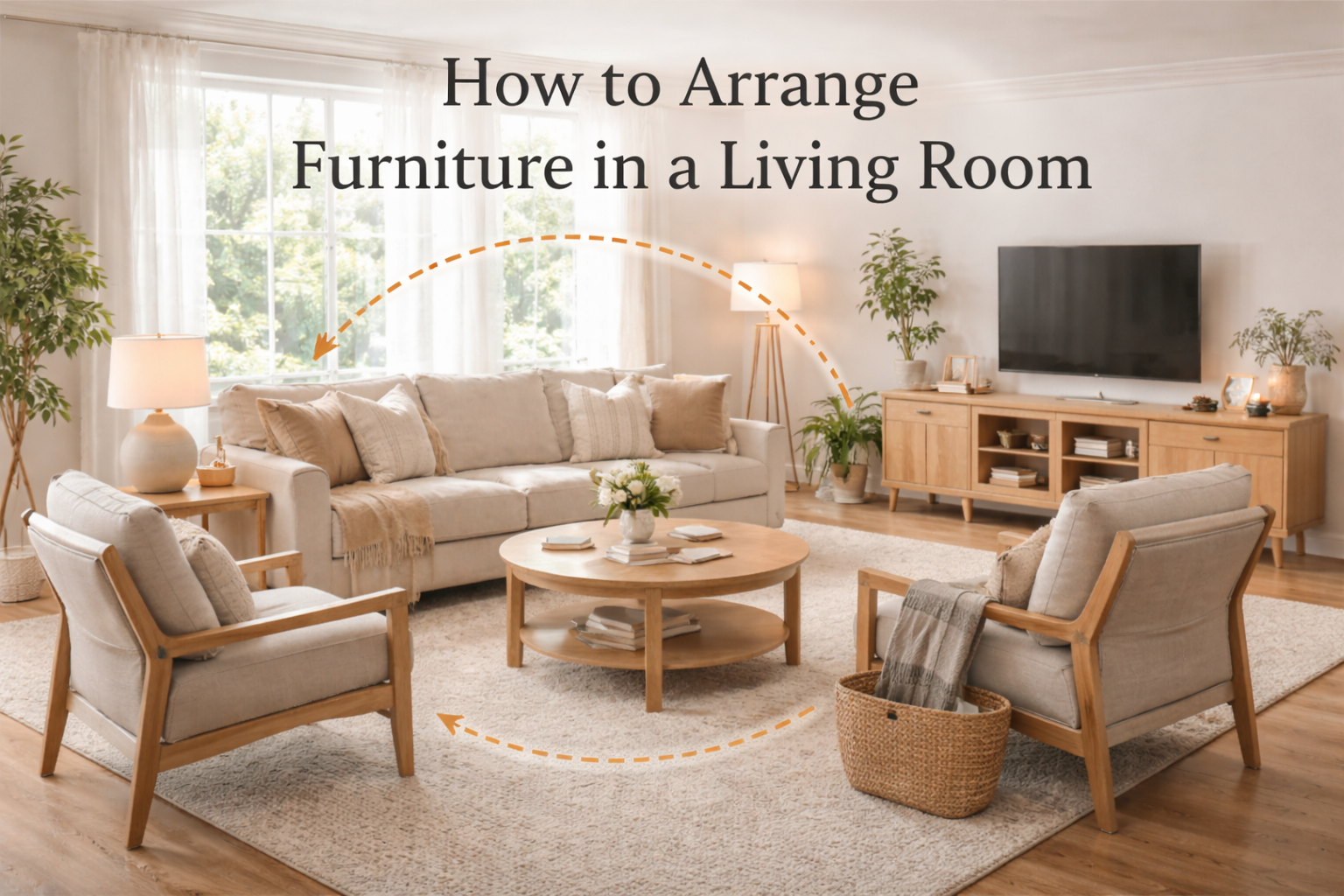
How to Arrange Furniture in a Living Room for Comfort and Flow
How to arrange furniture in a living room is one of the most common home design questions, and also one of the easiest to get wrong in subtle ways. A living room is rarely just a “sitting area.” It becomes a space for conversation, television, reading, working, relaxing, hosting guests, and sometimes even eating. Because it carries so many functions, the layout has to do more than look balanced it has to support real movement and daily behavior.
Most living rooms that feel uncomfortable are not poorly decorated. They are poorly organized. The furniture may be high quality, the colors may work, and the pieces may even be correctly sized, yet the room still feels awkward. People bump into corners, seating feels disconnected, or the space lacks a natural center.
The goal of arranging furniture is not to create a showroom. It is to create a space where the body relaxes automatically, where conversation feels natural, and where movement doesn’t require conscious effort.
In this guide, we’ll break down how to arrange furniture in a living room in a way that works long term regardless of whether your room is small, open plan, or oddly shaped.
Start With the Living Room’s Primary Function
Before moving furniture, it helps to answer one simple question: what is this living room primarily for?
Many people try to build a living room that does everything equally well. The result is usually a space that feels unfocused. The most functional living rooms have a clear priority.
Common living room priorities include:
- Conversation and hosting
- Family relaxation and daily use
- TV and entertainment
- Reading and quiet time
- Multi-use space (TV + work + family)
Once the primary purpose is clear, layout decisions become easier. A living room designed for conversation will have seating that faces inward. A living room designed around TV will orient seating toward a screen. A multi-use living room will prioritize flexible furniture placement.
This step matters because how to arrange furniture in a living room depends on what you want the room to support.
Related reading:
https://furnituretraditions.net/interior-layouts-and-daily-routines
Identify Natural Movement Paths Before You Place Furniture
The most common mistake in living room layouts is ignoring circulation. People place furniture based on symmetry, then discover that the room feels tight or blocked.
Before you commit to any arrangement, observe where people naturally walk:
- from the door to the seating area
- from seating to kitchen or hallway
- from seating to windows or balcony
- from seating to storage or shelves
If furniture blocks these natural paths, the room will always feel uncomfortable, even if it looks visually balanced.
A simple rule: you should be able to move through the living room without turning sideways, squeezing between furniture, or stepping around corners.
When you understand circulation, you understand the foundation of how to arrange furniture in a living room. Layout is not about furniture first, it’s about movement first.
Choose a Clear Anchor Point for the Layout
A living room needs a focal point. Not a decorative focal point, but a structural one.
Anchor points can include:
- a fireplace
- a TV wall
- a large window
- a central coffee table
- a feature wall or built-in shelves
Once the anchor point is clear, furniture placement becomes logical. Seating should relate to the anchor. The room should feel like it has a center rather than a scattered arrangement of objects.
This is where many layouts fail: furniture is placed around walls without a shared center. The result is a living room that feels like a waiting room.
A strong anchor creates visual calm and functional clarity.
How to Arrange Furniture in a Living Room With Seating That Feels Connected
Seating arrangement is the heart of the living room.
The goal is not to push everything against walls. The goal is to create a seating zone that feels intentional and comfortable.
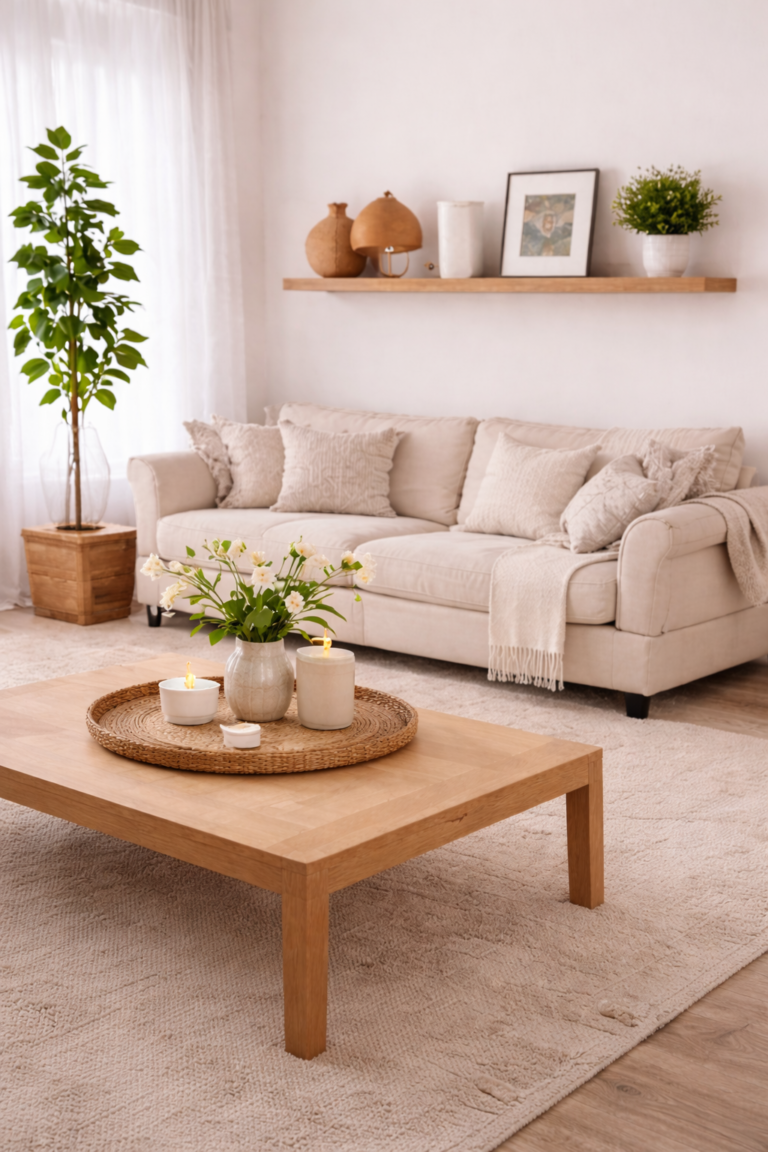
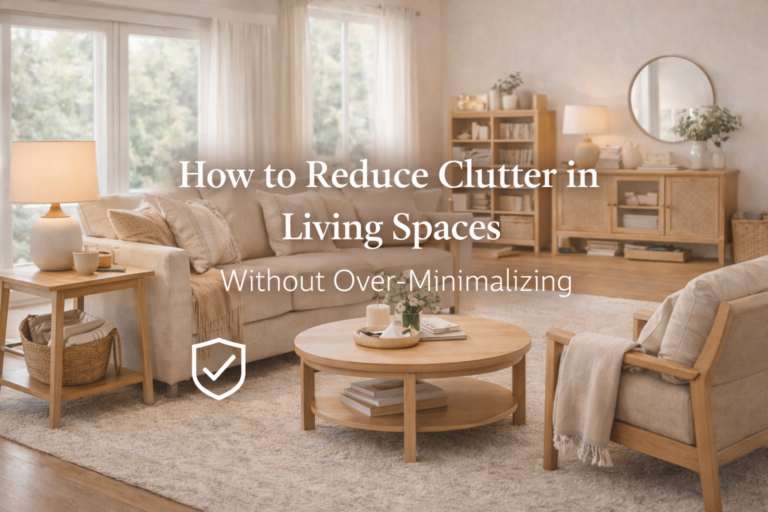
A common successful seating structure includes:
- one primary sofa
- one or two secondary chairs
- a coffee table or ottoman
- side tables or small surfaces
- a rug that visually unites the zone
When seating is arranged correctly, people naturally face each other, conversation feels easy, and the room feels stable.
The most important factor is orientation. Chairs should not feel like they are “watching” the sofa from across the room. They should feel like they belong to the same group.
This is a key part of how to arrange furniture in a living room: seating must form a social shape, not a scattered lineup.
Related reading:
https://furnituretraditions.net/furniture-usability-over-time
Avoid the “Everything Against the Wall” Layout
Pushing all furniture against walls is a common instinct, especially in smaller rooms. People believe it creates more space. In reality, it often creates the opposite effect.
When furniture is pressed against walls:
- the center of the room feels empty and awkward
- seating feels disconnected
- the room lacks a natural conversation zone
- furniture looks smaller and less intentional
In many cases, pulling the sofa even 10–20 cm away from the wall improves balance and makes the room feel more designed.
This is especially true in medium-sized rooms where furniture can float slightly without blocking movement.
If you want to master how to arrange furniture in a living room, learn to treat furniture as part of a zone, not as wall decoration.
Use Rugs to Define the Living Zone
Rugs are one of the most powerful layout tools because they create boundaries without walls.
A rug defines:
- where the seating zone begins and ends
- how furniture relates visually
- the scale of the conversation area
A rug that is too small makes furniture feel disconnected. A rug that is too large can overwhelm the space. The right rug size visually “locks” the seating arrangement together.
A practical rule: at least the front legs of major seating pieces should sit on the rug. Ideally, chairs and sofa legs should share the same rug surface.
Rug choice also affects acoustics and comfort. Living rooms often feel more relaxing when sound is softened by textiles.
Coffee Table Placement Matters More Than People Think
Coffee tables are often chosen as a decorative object, but they shape usability daily.
A coffee table should be:
- close enough to reach comfortably
- far enough to allow easy movement
- proportional to the seating size
If the coffee table is too far, it becomes useless. If it is too close, it becomes an obstacle.
The coffee table also defines the center of the seating zone. It creates a shared surface for objects, drinks, books, and everyday items. Without it, a living room can feel incomplete.
This is why coffee tables play a central role in how to arrange furniture in a living room.
Lighting Should Support the Furniture Layout
Lighting is often added after furniture is arranged. This leads to problems.
A good layout considers lighting early because lighting affects how furniture is used.
Living room lighting should include:
- ambient light (overall illumination)
- task light (reading lamps, focused light)
- accent light (optional, mood-based)
If seating is placed in a dark corner without a reading lamp, the space will be underused. If the TV wall has glare from a window, the layout will constantly feel wrong.
Lighting is not just decoration. It shapes behavior.
This connects directly to the broader concept of interior decision making.
Related reading:
https://furnituretraditions.net/interior-design-decision-making
How to Arrange Furniture in a Living Room With a TV
TV-based living rooms require specific layout logic.
The biggest mistake is treating the TV as the only focal point. A living room still needs comfort and conversation potential.
A balanced TV layout usually includes:
- sofa facing TV
- secondary chair angled toward sofa (not directly facing TV)
- coffee table centered
- side tables for usability
- storage or console beneath TV
The best TV layouts allow people to watch comfortably while still being able to talk without awkward angles.
If the room feels like a cinema, it becomes less social. If the room feels like a conversation lounge, it may not support viewing.
A strong layout balances both.
Small Living Room Layout Strategy
Small living rooms require precision.
The most important principle: do not over-furnish.
A small living room works best when furniture is:
- appropriately scaled
- multi-functional
- visually light (legs, open bases)
- arranged for circulation
Instead of adding more seating, focus on making the primary seating comfortable and supported.
In small spaces, the wrong coffee table size or oversized sofa can destroy flow completely.
A small living room also benefits from vertical storage and wall-mounted lighting to reduce floor clutter.
Open Plan Living Room Layout Strategy
Open plan rooms require zoning.
When living and dining spaces share one room, furniture arrangement must create invisible boundaries.
A rug, sofa orientation, and lighting can define the living zone. Dining furniture should feel separate but connected.
The key is to avoid furniture that floats without purpose. Open plans often feel messy when zones are not clearly defined.
A strong layout makes each zone feel intentional, even without walls.
The Most Common Living Room Layout Mistakes
Even well-furnished homes make the same mistakes repeatedly.
1. Oversized furniture
A large sofa may look luxurious but can dominate the room and restrict movement.
2. Too many small pieces
Multiple small tables, stools, and extra chairs create visual noise and reduce usability.
3. No clear center
Without a rug or coffee table center, the room feels scattered.
4. Poor lighting placement
A room may look fine in daylight but feel unusable at night.
5. Ignoring storage needs
Living rooms collect remote controls, chargers, books, and daily items. Without storage, clutter grows.
Understanding these mistakes helps clarify how to arrange furniture in a living room in a way that feels stable long term.
FAQ
How do I start arranging furniture in a living room?
Start by identifying the room’s main purpose and mapping circulation paths before placing any large pieces.
Should living room furniture be against the wall?
Not always. Pulling furniture slightly away from walls often improves balance and creates a more intentional seating zone.
How far should a coffee table be from the sofa?
A common comfortable distance is around 40–50 cm, enough to reach items but still allow movement.
What is the best layout for conversation?
A layout where seating faces inward, supported by a rug and a central coffee table, usually works best.
How do I arrange furniture in a small living room?
Use scaled furniture, avoid unnecessary pieces, and prioritize circulation and multi-functional items.
Conclusion
Learning how to arrange furniture in a living room is not about copying a showroom layout. It is about designing a space that supports daily routines without friction. The best living rooms feel natural to move through, comfortable to sit in, and flexible enough to evolve over time.
When you prioritize circulation, seating connection, scale, and lighting, your living room becomes more than a styled space. It becomes a functional environment that encourages relaxation and social comfort exactly what a living room is meant to do.