How to Make a Narrow Room Look Wider Without Renovation
How to make a narrow room look wider is a question that usually appears after furniture has already been placed and the space feels constrained. The room may be clean, organized, and thoughtfully decorated, yet it still feels compressed from side to side.
Narrow rooms create a specific type of discomfort. Circulation feels tight. Walls feel close. Furniture appears oversized even when it technically fits.
The solution is rarely structural. In most cases, width perception can be improved through layout decisions, proportion adjustments, and visual strategy.
In this guide, we will break down how to make a narrow room look wider using practical design principles that work in everyday homes.
Start With Furniture Depth, Not Quantity
In narrow rooms, depth matters more than number of pieces.
Deep sofas, wide armchairs, and bulky storage units reduce side clearance and exaggerate the corridor effect.
Switching from deep furniture to slightly shallower profiles often creates noticeable breathing room.
The issue is not always clutter. It is scale.
This relates directly to Furniture Scale and Proportion: The Real-Home Rules That Prevent Regret, where furniture dimensions must match room proportions to maintain balance.
Keep Pathways Clear and Continuous
Narrow rooms suffer most when movement paths are interrupted.
Avoid placing large items directly opposite each other if they compress walking space. Circulation should feel smooth and unobstructed.
If you feel the need to turn your body sideways while walking, the layout needs adjustment.
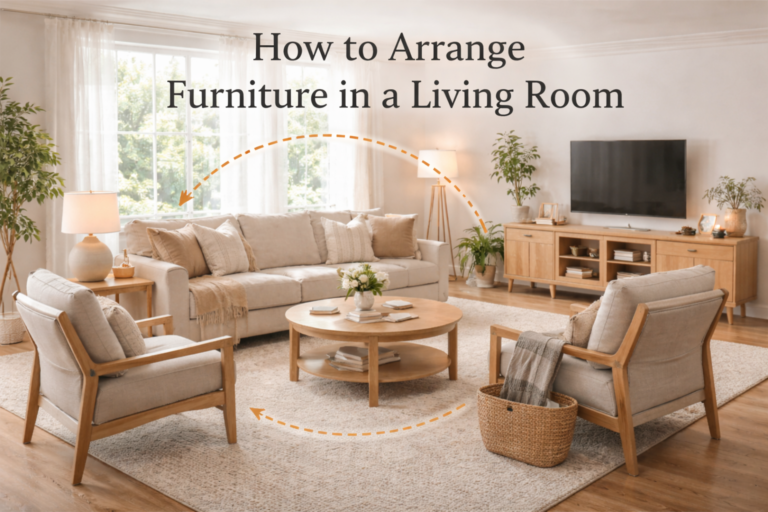
Reviewing How to Design a Room Layout That Feels Natural and Functional can help identify where space should remain open rather than filled.
Use Horizontal Visual Lines Strategically
Vertical lines make ceilings look taller. Horizontal lines make rooms feel wider.
To widen perception:
• use long, low furniture
• incorporate horizontal artwork
• choose elongated lighting fixtures
• use wide rugs that extend toward side walls
Horizontal emphasis stretches the room visually.
However, balance is important. Too many strong horizontal contrasts can create fragmentation.

Extend Rugs Toward the Side Walls
A narrow room often feels like a hallway when rugs are too small.
A properly sized rug that reaches closer to the side walls helps visually widen the floor area.
Rug size plays a critical role in perception. Undersized rugs create floating islands that emphasize narrowness.
If needed, revisit guidance in How to Choose the Right Rug Size for a Living Room to ensure proportion supports expansion rather than compression.
Light and Color Can Expand Side Walls
Side walls in narrow rooms should not feel heavy.
Lighter wall tones reflect light and soften boundaries. Strong dark contrasts on opposing walls can intensify the narrow effect.
Mirrors placed strategically along one longer wall can also increase perceived width. However, mirrors must reflect light or depth, not clutter.
The goal is continuity, not distraction.
Avoid Tall, Bulky Storage Along Both Walls
Placing tall cabinets on both sides exaggerates vertical compression.
If storage is required, consider:
• low-profile units
• wall-mounted shelving
• one dominant storage wall instead of two
When both walls carry visual weight, the room closes inward.
Reducing vertical bulk along at least one side improves balance.
Break the “Tunnel Effect”
Narrow rooms often suffer from a visual tunnel effect where attention is drawn only toward the far end.
To reduce this:
• create subtle focal points along the sides
• vary textures across walls
• avoid lining furniture symmetrically from end to end
Strategic asymmetry can interrupt the corridor illusion.
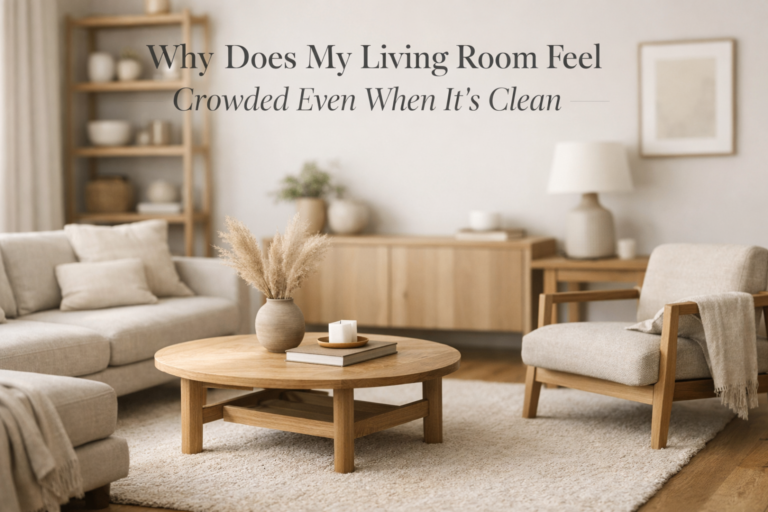
This concept overlaps with issues described in Why Does My Living Room Feel Crowded Even When It’s Clean, where visual density affects spatial comfort.
Use Furniture That Allows Visual Transparency
Glass tables, open-frame shelving, and raised-leg furniture allow the eye to travel underneath and through pieces.
Solid block furniture absorbs visual space. Transparent or elevated furniture restores it.
Even lifting a sofa slightly off the floor with visible legs can make a room feel lighter.
Small design shifts create measurable perceptual changes.
Ceiling and Lighting Strategy
While width is the goal, vertical perception still matters.
Slim ceiling fixtures and evenly distributed lighting prevent shadows along side walls.
Uneven lighting can exaggerate narrowness by darkening corners.
Layered lighting helps create balanced illumination across the full width of the room.
Test Before Replacing Everything
Before buying new furniture:
- Temporarily remove one large piece
- Shift layout toward one wall
- Evaluate walking space
- Assess how the room feels from multiple angles
Sometimes repositioning alone solves most of the issue.
Narrow rooms demand precision more than decoration.
FAQ
How can I make a narrow living room look wider?
Use shallower furniture, extend rugs toward side walls, emphasize horizontal lines, and maintain clear pathways.
Do mirrors help widen a narrow room?
Yes, when placed strategically to reflect light or depth rather than clutter.
Should I push furniture against walls in a narrow room?
Not always. Slightly floating furniture can sometimes improve balance and flow.
What colors make a narrow room look wider?
Lighter tones generally reflect more light and soften boundaries.
Is furniture size more important than wall color?
Yes. Proportion and layout have a greater impact on spatial perception than paint alone.
Conclusion
Learning how to make a narrow room look wider is about understanding proportion, flow, and visual weight. Structural changes are rarely necessary. Strategic furniture depth, rug sizing, horizontal emphasis, and balanced lighting often transform perception without altering square footage.
Width is not always about measurement. It is about how space is experienced.