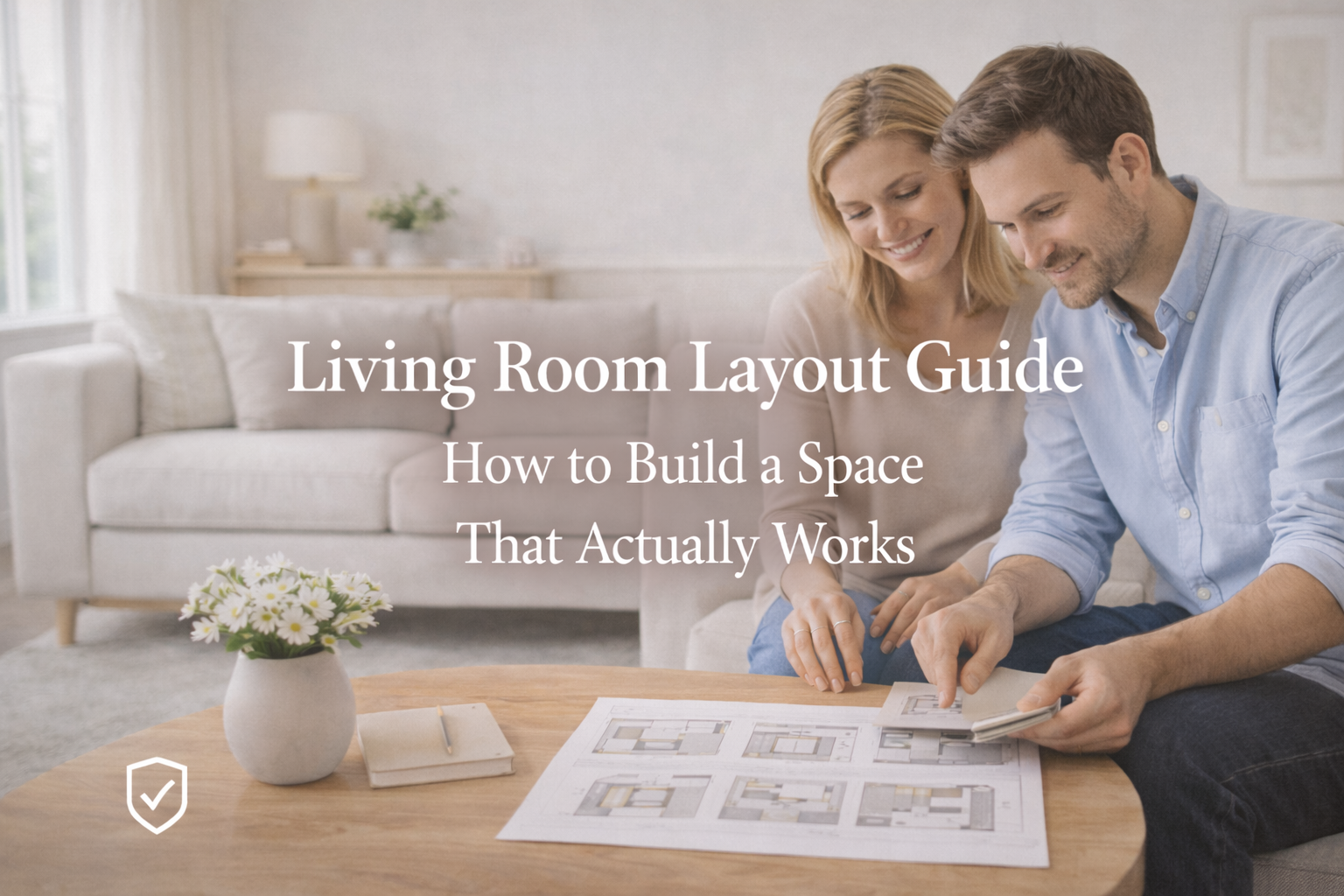
Living Room Layout Guide: How to Build a Space That Actually Works
Living room layout guide searches usually happen after something feels off. The furniture is there. The room is functional. But the space does not feel natural, comfortable, or visually balanced.
This happens because layout is not just about placing furniture. It is about how people move, sit, interact, and experience the room over time.
A good layout feels invisible. A bad one constantly creates friction.
In this guide, we will break down how to build a living room layout that works in real homes, using practical measurements, proportion rules, and design principles that improve both comfort and structure.
Start With the Main Function of the Room
Before placing furniture, define how the room is actually used.
Common functions include:
• conversation and socializing
• TV viewing
• multi-purpose living and working
• family space with flexible seating
Trying to support too many functions without structure often leads to cluttered layouts.
Clear intention simplifies decisions.
This aligns with Home Furniture Planning Guide: How to Build a Space That Works Long Term, where function drives layout before aesthetics.
Establish a Clear Focal Point
Every living room needs a focal point.
This could be:
• TV wall
• fireplace
• large window
• statement artwork
Furniture should orient toward that focal point.
Without it, the room feels scattered.
Too many focal points create visual competition, which often leads to the same discomfort explained in Why Does My Living Room Feel Crowded Even When It’s Clean.
One dominant anchor creates clarity.
Use Proper Spacing Between Furniture
Spacing determines comfort more than furniture choice.
Key measurements:
• 16 to 18 inches between sofa and coffee table
• 30 to 36 inches for main walkways
• 24 to 30 inches between seating pieces
These distances allow natural movement and easy interaction.
Incorrect spacing creates constant friction.
For example, placing a table too far from the sofa breaks usability, which is explained in Coffee Table Distance From Sofa: What Actually Works.
Anchor the Layout With the Right Rug Size
A rug defines the seating zone.
Without it, furniture feels disconnected.
The rug should:
• connect major seating pieces
• extend under front legs of sofas and chairs
• match the scale of the seating area
Undersized rugs create fragmentation.
Correct sizing improves cohesion immediately.
This is covered in detail in How to Choose the Right Rug Size for a Living Room, where proportion determines whether the layout feels unified.
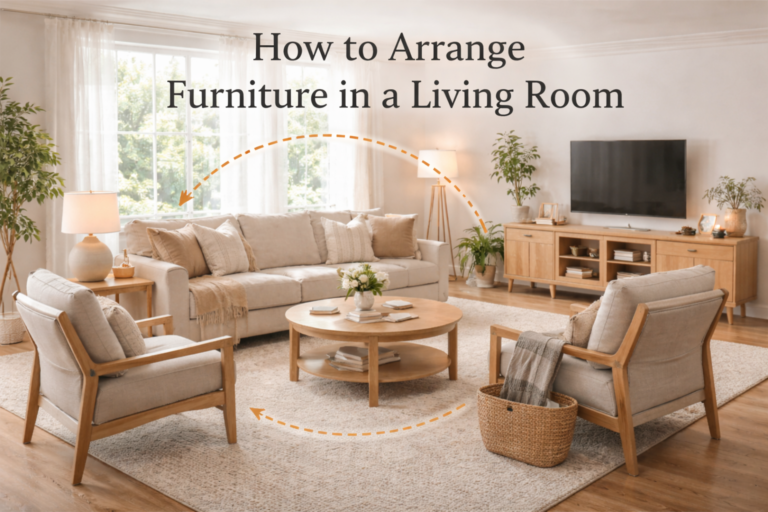
Position Furniture Based on Flow, Not Walls
A common mistake is pushing all furniture against walls.
While this seems like it creates space, it often breaks the room’s structure.
Furniture should be placed based on:
• conversation distance
• visual balance
• circulation paths
Floating furniture slightly inward can create a more natural layout.
Understanding How to Arrange Furniture in a Living Room for Comfort and Flow helps clarify how positioning affects movement and interaction.
Balance Furniture Scale With Room Size
Even a well-arranged layout fails if scale is wrong.
Oversized furniture makes rooms feel cramped. Undersized furniture makes rooms feel empty.
Balance is key.
Each piece should relate to the others in size and proportion.
This principle is explained in Furniture Scale and Proportion: The Real-Home Rules That Prevent Regret, where size relationships define how the room feels.
Define Clear Walking Paths
Every living room needs clear circulation.
You should be able to:
• enter the room easily
• move between seating areas
• access all functional zones without obstruction
Blocked pathways make rooms feel smaller than they are.
This is especially important in compact layouts, where poor flow often creates the perception issues discussed in How to Make a Narrow Room Look Wider Without Renovation.
Layer Lighting for Depth
Lighting affects how layout is perceived.
A single ceiling light flattens the space.
Layered lighting creates depth:
• overhead lighting for general illumination
• floor or table lamps for localized light
• accent lighting for atmosphere
Balanced lighting helps define different zones within the same room.
Without it, the layout feels incomplete even when furniture is correct.
Use Wall Elements to Complete the Layout
Walls are part of the layout, not just decoration.
Artwork, shelving, or vertical elements help connect the room from floor to ceiling.
Poor wall usage creates imbalance.
Correct placement strengthens structure.
Understanding Where to Place Wall Art for Proper Proportion ensures wall elements support furniture rather than compete with it.
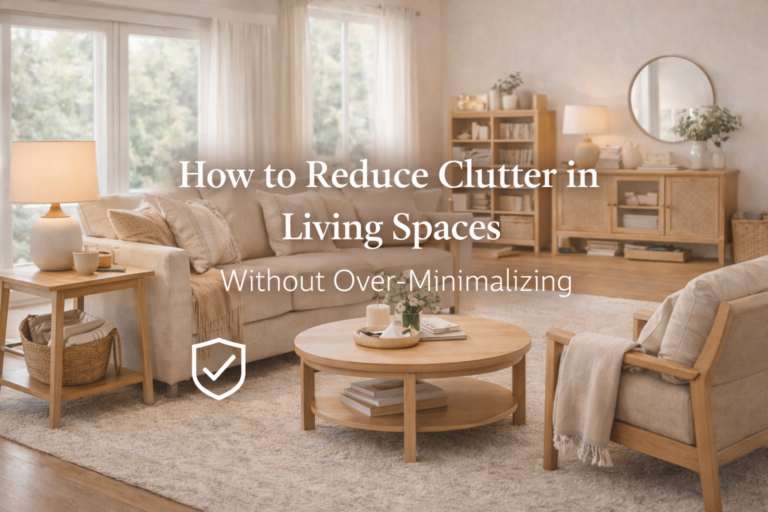
Avoid Overcrowding With Too Many Pieces
More furniture does not improve layout.
Too many pieces create visual noise and restrict movement.
It is better to have:
• fewer, well-sized pieces
• clear spacing
• defined zones
Overcrowding is one of the main reasons rooms feel tight even when clean.
If this sounds familiar, it connects to Why Does My Room Feel Unfinished Even With Furniture, where imbalance often comes from structure, not quantity.
Adapt Layout to Real Use Over Time
Living rooms change after move-in.
Daily habits reveal what works and what does not.
Be willing to adjust:
• seating positions
• table placement
• lighting arrangement
Real comfort develops through use.
Furniture should adapt to life, not remain fixed.
This idea is reinforced in How Furniture Shapes Daily Routines in Modern Homes, where behavior influences layout success.
Test Before Finalizing the Layout
Before committing to a layout:
- Sit in each position
- Walk through all paths
- Test reaching surfaces
- Observe sightlines toward focal points
Small adjustments often produce large improvements.
Layout is not about perfection. It is about reducing friction.
FAQ
What is the most important part of a living room layout?
Function and flow. The room must support how people move and interact.
How far should furniture be from each other?
Typically 16 to 18 inches between sofa and table, and 30 to 36 inches for walkways.
Should furniture always be against the wall?
No. Floating furniture often creates better balance and interaction.
What size rug should I use?
Large enough to connect seating pieces, usually under front legs at minimum.
Why does my layout feel awkward?
Often due to poor spacing, unclear focal points, or incorrect furniture scale.
Conclusion
A well-designed living room layout is not about decoration. It is about structure, proportion, and movement.
When furniture scale, spacing, lighting, and focal points align, the room feels natural and comfortable without effort. The goal is not to fill space, but to shape it in a way that supports everyday living.