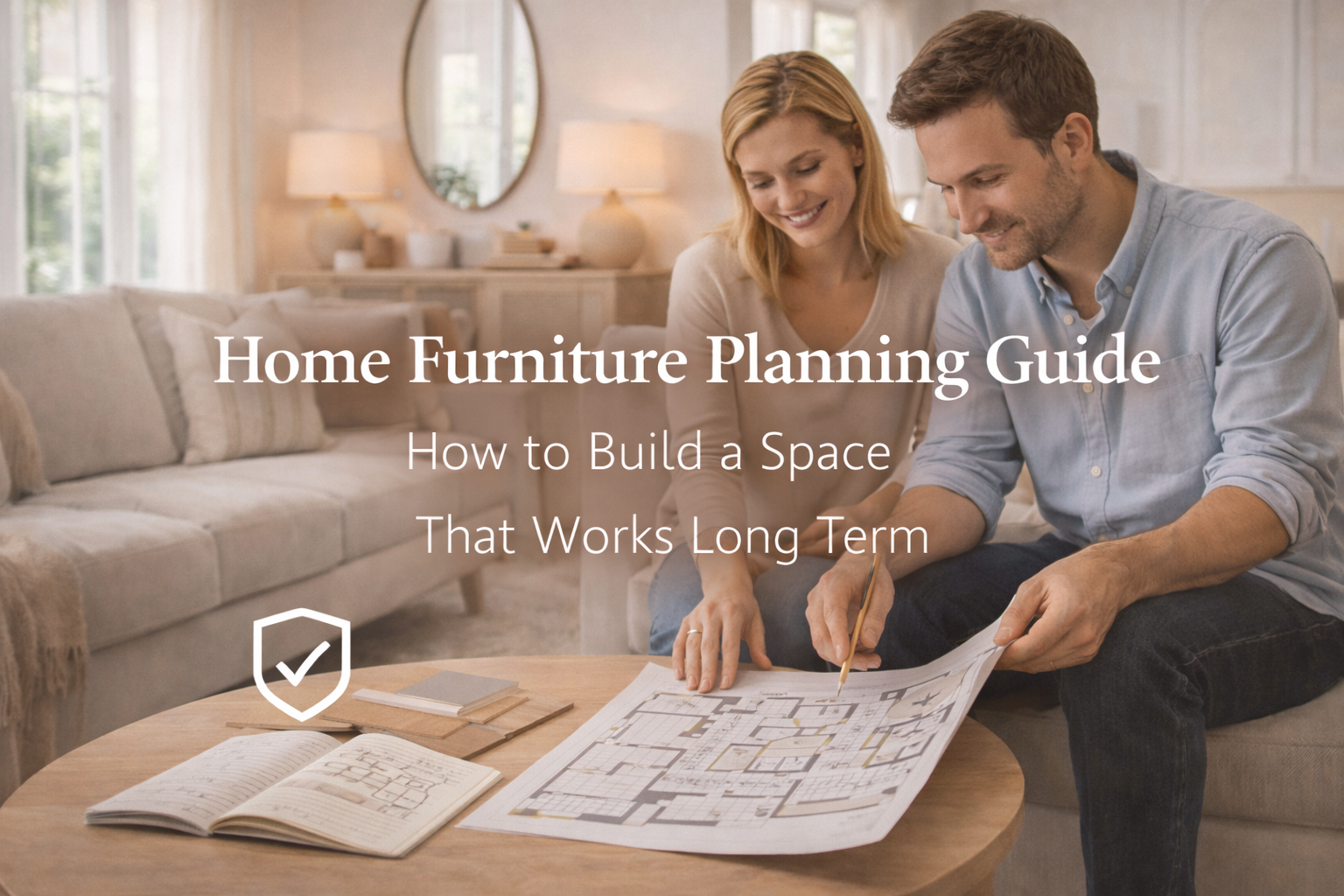
Home Furniture Planning Guide: How to Build a Space That Works Long Term
Home furniture planning guide is a phrase that sounds simple, but the process behind it is anything but. Most people don’t struggle because they lack taste. They struggle because furniture planning is a chain of decisions where one mistake creates multiple problems later.
A sofa that is too deep affects circulation. A dining table that is too large forces awkward seating. A storage unit placed in the wrong area creates clutter that never disappears. These are not decoration issues they are structural issues in the way a home functions.
Furniture planning is not about choosing pieces you like. It is about designing a system that supports your routines for years, even as your needs change.
This guide is designed to be practical. It does not assume a perfect lifestyle or a showroom home. It focuses on the real factors that determine whether furniture works: movement, proportion, usability, and long-term adaptability.
If you are furnishing a home from scratch, upgrading a few key pieces, or simply trying to understand why your space feels “almost right” but never fully comfortable, this guide will help you make decisions with clarity.
1. Start With Behavior, Not Style
The biggest mistake in furniture planning is starting with style.
Many people begin with inspiration photos and try to recreate a visual look. The problem is that these images rarely reflect daily life. They show ideal layouts, clean surfaces, and furniture arranged for appearance rather than routine.
A better starting point is behavior.
Ask yourself:
- Where do you spend most of your time in the home?
- What activities happen daily?
- Where do objects accumulate naturally?
- Which areas feel crowded or awkward?
- What tasks do you repeat every day?
Furniture planning becomes easier when you understand what your home needs to support.
This is why a strong home furniture planning guide always starts with lifestyle. A home designed around behavior feels effortless, even if it is not “perfectly styled.”
Related reading:
https://furnituretraditions.net/interior-design-decision-making
2. Define the Main Purpose of Each Room
Rooms often fail because they are expected to do too many things without structure.
A living room might be a space for relaxing, entertaining, working, and storage. A dining area might also be a workspace. A guest room might be used for storage 90% of the time.
This is normal. Modern homes are multifunctional. But multifunctional rooms need intentional furniture planning, or they become cluttered and confusing.
Before buying furniture, define the primary purpose of each room:
- Living room: rest and conversation? media? family time?
- Dining area: daily meals? hosting? working?
- Bedroom: sleep and storage? reading? dressing?
- Home office: focused work? mixed use?
This step clarifies priorities. Once the purpose is clear, furniture choices become less emotional and more logical.
3. Plan the Layout Around Movement First
Movement is the foundation of furniture planning.
Many furniture mistakes happen because people think about “fit” in terms of measurements only. They measure a wall and buy a sofa that matches the wall length. But circulation is not about wall length. It is about how people move through a space.
A home can look spacious on paper but feel uncomfortable if movement is blocked.
When following a home furniture planning guide, the most important circulation principles are:
Leave clear walking paths
People should be able to walk naturally without turning sideways or stepping around furniture.
Avoid forcing narrow passageways
A narrow passage may be technically possible, but it will feel irritating daily.
Consider doors, windows, and access points
Furniture should not block access to windows, balcony doors, or storage zones.
Plan “activity zones”
Where do people sit? Where do they stand? Where do they work? Movement should flow between these zones.
If circulation is wrong, the home will feel awkward regardless of how beautiful the furniture is.
Related reading:
https://furnituretraditions.net/interior-layouts-and-daily-routines
4. Understand Furniture Scale (The Most Common Hidden Problem)
Furniture scale is one of the biggest reasons homes feel off.
Scale is not only about whether furniture fits. It is about whether furniture feels balanced relative to the room.
Oversized furniture makes a room feel tight. Undersized furniture makes it feel unfinished. Furniture that is too tall, too low, too deep, or too narrow can create discomfort even if the style is correct.
This is why scale should be a core part of any home furniture planning guide.
Signs furniture scale is wrong:
- you constantly bump into edges
- seating feels too low or too deep
- the room feels crowded despite open floor space
- furniture dominates the visual focus
- the room feels “empty” even with furniture present
Scale issues are often corrected not by buying new furniture, but by adjusting layout and proportions.
Related reading:
https://furnituretraditions.net/furniture-scale-in-real-homes
https://furnituretraditions.net/furniture-proportions-in-real-homes
5. Choose Large Anchor Pieces Before Smaller Items
A common planning mistake is buying accessories and smaller furniture first.
People buy rugs, side tables, lamps, and decor, then later realize the main furniture doesn’t fit the system they created.
The correct order is the opposite.
Anchor pieces define the room:
- sofa
- bed
- dining table
- wardrobe or main storage
- large shelving units
Once anchor pieces are chosen, everything else becomes easier.
This is a key step in a professional home furniture planning guide: big pieces create structure. Small pieces refine it.
6. Prioritize Comfort Where You Spend the Most Time
Comfort is not equally important everywhere.
A decorative chair in a hallway doesn’t need the same ergonomic support as a sofa where you relax daily. But many people treat comfort as a general idea instead of a priority system.
To plan furniture effectively, identify where comfort matters most:
- sofa and main seating
- bed and mattress setup
- dining chairs (if used daily)
- office chair (if working at home)
Comfort determines long-term satisfaction. Even visually perfect furniture becomes frustrating if it causes discomfort.
This is why comfort is central to home furniture planning guide decisions.
Related reading:
https://furnituretraditions.net/furniture-usability-over-time
7. Don’t Ignore “Invisible Furniture”: Storage
Storage is often treated as an afterthought.
People buy sofas, tables, and chairs first, then later realize they have nowhere to put everyday objects. The result is clutter, and clutter destroys even the best design.
Storage is not a design detail. It is infrastructure.
In a functional home, storage should support daily routines:
- entryway storage for shoes, bags, keys
- living room storage for electronics, books, games
- dining storage for tableware and seasonal items
- bedroom storage for clothing and linens
A good home furniture planning guide treats storage as essential, not optional.
When storage is planned well, the home stays calm with less effort.
8. Choose Materials That Age Well (Not Materials That Look Perfect)
Furniture changes with time. This is unavoidable.
Wood develops patina. Fabric softens or fades. Finishes respond to touch and light.
Instead of choosing materials that look perfect on day one, choose materials that age gracefully.
Materials that often age well:
- solid wood with natural finish
- leather that softens over time
- high-quality upholstery fabrics with dense weave
- matte finishes that hide minor wear
Materials that often show wear quickly:
- glossy lacquer finishes
- low-density fabric prone to pilling
- thin veneer surfaces on high-contact areas
A strong home furniture planning guide considers aging as part of the purchase decision, not as an unfortunate surprise later.
Related reading:
https://furnituretraditions.net/how-furniture-ages-in-real-homes
9. Plan for Maintenance Before You Buy
Maintenance is not glamorous, but it determines whether furniture remains satisfying.
Before buying, ask:
- can this surface be cleaned easily?
- does this fabric stain easily?
- will fingerprints show constantly?
- is this furniture heavy and difficult to move?
- will this finish require special care?
Many furniture regrets happen because the furniture demands constant effort.
Long-term furniture success often comes from choosing pieces that are easy to live with, not pieces that look impressive.
10. Think About Furniture as a System, Not as Individual Pieces
Furniture planning fails when each item is chosen separately.
A sofa may be beautiful, but it must relate to the coffee table height, rug size, lighting, and seating arrangement. A dining table must relate to chair spacing and circulation. Storage must relate to daily behavior.
A good home furniture planning guide treats furniture as a system.
When furniture works as a system:
- movement feels natural
- the room feels calm even when lived in
- the space can adapt without breaking cohesion
This is why professional interior designers rarely shop item-by-item. They plan relationships.
Related reading:
https://furnituretraditions.net/interior-design-and-daily-behavior
11. Plan for Flexibility (Because Life Changes)
The most underestimated aspect of furniture planning is change.
Homes evolve:
- family size changes
- work-from-home routines appear
- children grow
- hobbies require space
- priorities shift
Furniture that lasts long-term is furniture that adapts.
Examples of flexibility-focused choices:
- modular seating
- movable side tables
- multi-purpose benches
- adjustable shelving
- dining tables that can expand
Flexibility reduces the need for replacement and allows the home to evolve without constant redesign.
This is one of the most important lessons in any home furniture planning guide.
12. Why Some Homes Always Feel “Almost Right”
Many homes feel like they are close to working, but never fully comfortable.
This is often because the furniture is individually good, but the system is misaligned.
Common causes:
- circulation is blocked by one oversized piece
- seating is not oriented toward natural conversation
- storage is not located where clutter forms
- lighting is decorative but not functional
- surfaces encourage accumulation without organization
The solution is rarely buying more decor. It is usually rethinking structure.
If your home feels “almost right,” start by analyzing movement and daily habits. Furniture is often not wrong it is simply placed or scaled incorrectly.
13. A Practical Checklist for Furniture Planning
Here is a simple checklist you can apply to almost any purchase:
Before buying:
- Does this piece support how the room is used daily?
- Will it block circulation or reduce flexibility?
- Does its scale match the room proportions?
- Does it solve a real need or just look good?
- Will the materials age well with use?
- Is it easy to clean and maintain?
After buying:
- Does it improve comfort and routine?
- Does it create new clutter or reduce it?
- Does it feel integrated with other pieces?
This checklist is a practical way to use this home furniture planning guide without overthinking every decision.
Conclusion
Furniture planning is not about creating a showroom. It is about building a home that works.
A strong home furniture planning guide focuses on behavior, movement, scale, comfort, storage, and material aging. These factors determine whether furniture becomes a long-term asset or a recurring source of frustration.
When furniture supports daily routines, the home becomes easier to live in. And when a home is easy to live in, it naturally becomes more beautiful over time.
FAQ
What is the most important part of a home furniture planning guide?
Layout and circulation. If movement is wrong, furniture will never feel fully comfortable, no matter how good it looks.
Should I choose furniture style or function first?
Function first. Style becomes easier once the structure of the room works.
How do I avoid buying furniture that feels wrong later?
Focus on proportion, comfort, and adaptability. Also consider how the material will age with daily use.
Why does my home feel cluttered even with good furniture?
Because storage may not match daily behavior. Clutter often forms where storage is inconvenient.